A deep bass line, a clipped chord on the offbeat, drums that leave room to breathe. Reggae emerged in Jamaica in the late 1960s. In the 1970s, roots reggae carried the stories and hopes of Kingston’s neighborhoods onto records heard far beyond the island.
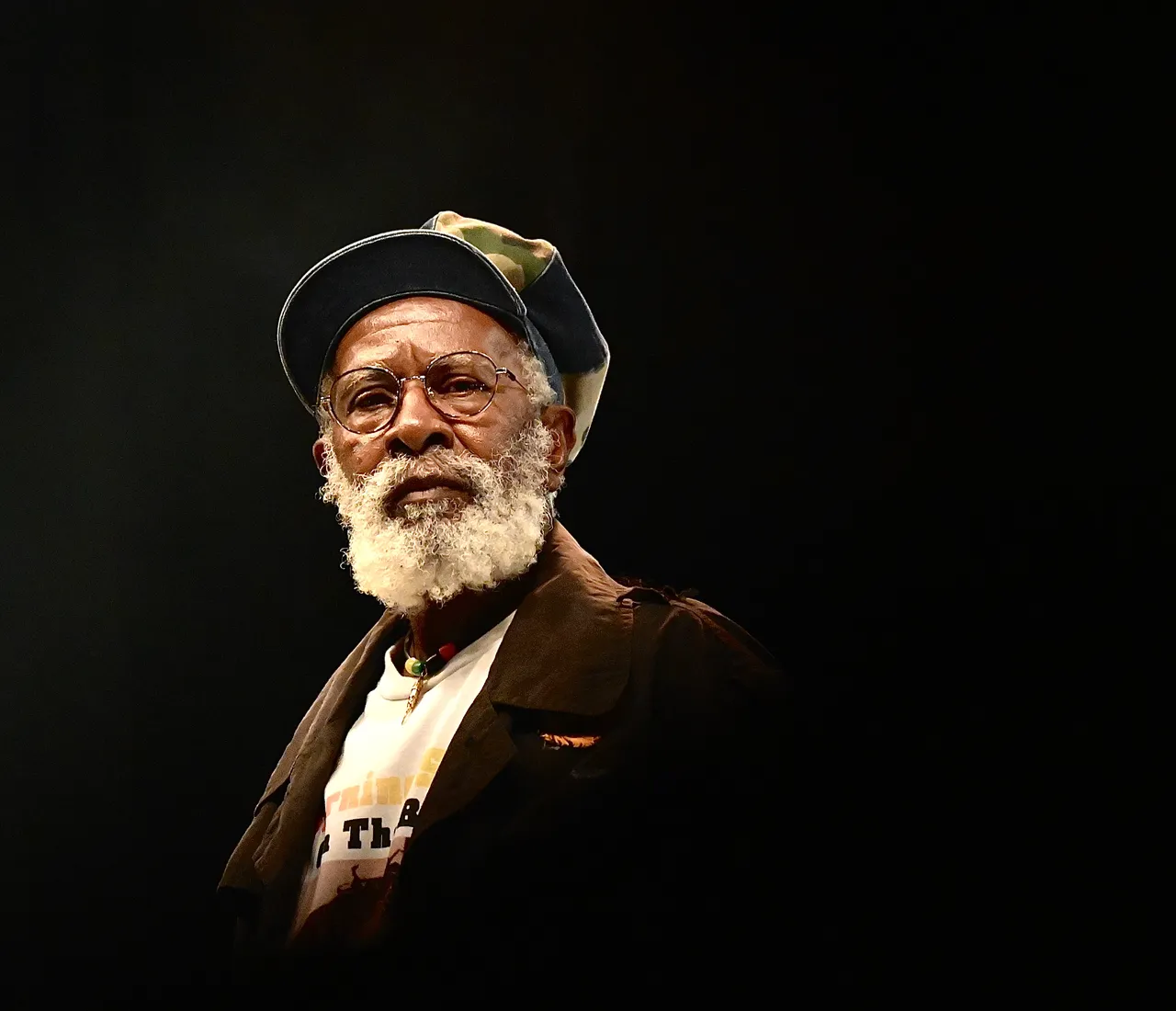
Burning Spear at the Reggae Geel festival in Belgium in 2023. Photo by Peter Verwimp, Wikimedia Commons, public domain (CC0).
OriginsJamaica in the late 1960s, first in western Kingston.
The name“Do the Reggay” by Toots and the Maytals (1968) is the first known song to use the word.
The soundA full, weighty bass line, a chord on the offbeat and a drum accent on beat three.
HeritageUNESCO added Jamaican reggae to its list of intangible cultural heritage in November 2018.
01
Listen first
Start with Peter Tosh at the Greek Theatre in Los Angeles. He’s singing “Get Up, Stand Up,” which he wrote with Bob Marley and released with the Wailers in 1973. This is the concert heard on Tosh’s 1984 album “Captured Live.”
Peter Tosh, “Get Up, Stand Up,” recorded live in 1983. Shared on his official channel.
02
From ska to reggae
The story begins in Jamaican studios in the late 1950s. Ska mixed Caribbean mento with American jazz and rhythm and blues, accenting the offbeat. It was the sound of celebration when Jamaica won independence from the UK in 1962.
The sound systems helped make it happen. These mobile speaker setups had been playing at parties since the 1940s. Clement “Coxsone” Dodd ran one before founding Studio One in 1954. The studio recorded the Skatalites, Toots and the Maytals, the Wailers and Burning Spear.
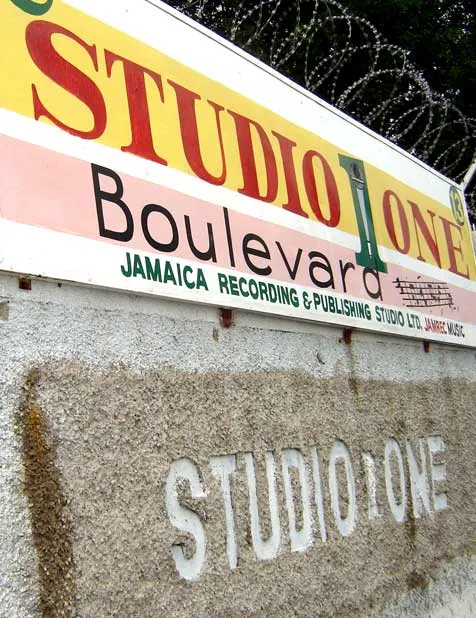
The Studio One sign on the former Brentford Road in Kingston. Photo by dubdem sound system, Wikimedia Commons, licensed under CC BY 2.0.
Around the summer of 1966, the pace began to slow. Rocksteady lasted roughly two years, until spring 1968, and gave the bass more room. Guitarist Lynn Taitt described it as ska played very slowly.
In 1968, Toots and the Maytals released “Do the Reggay,” the first known song to use the word. Toots Hibbert said he took it from a slang term for someone scruffy. Reggae was taking shape, with a slower pulse still.
03
The roots sound
Four things to listen for in a roots reggae recording.
The bass
Full and heavy, with the treble rolled off so you hear the low end. The bass holds the song together.
The riddim
The backing track, often recognizable from its bass line alone. A popular riddim can underpin dozens of different songs, each with its own vocal.
The one drop
Listen to what the drummer leaves out. Beat one goes by, and the snare and kick hit together on beat three. The Wailers’ drummer Carlton Barrett helped popularize the pattern. Who first played it is still debated.
The skank
A short, sharp chord on the offbeat, played on rhythm guitar or keyboard. It’s one of reggae’s most recognizable sounds.
Producers such as King Tubby and Lee “Scratch” Perry took the sound in another direction. They stripped back the vocal, brought bass and drums forward and added echo. The result was dub.
04
What roots reggae sings about
The golden age of roots reggae came in the second half of the 1970s. Singers talked about the things they lived with: poverty, Black pride and resistance to oppression and racism. UNESCO traces the music back to marginalized communities in western Kingston, whose concerns reggae gave voice to.
Africa recurs in these songs as an imagined homeland. Burning Spear devoted an album to political activist Marcus Garvey and his Pan-African ideas. Many songs also draw on the history of Rastafari, a religious movement that emerged in Jamaica in the 1930s and looked toward Africa.
Current events found their way onto records too. Culture’s “Two Sevens Clash” speaks of the political violence of those years.
05
Songs to start with
Follow reggae through ten songs, in release order.
1968
“Do the Reggay,” Toots and the Maytals. The song that gave the genre its name.
1969
“Israelites,” Desmond Dekker and the Aces. This lament about poverty reached number one in the UK and number nine on the US Billboard chart.
1972
“The Harder They Come,” Jimmy Cliff. From Perry Henzell’s film, whose soundtrack also featured “Many Rivers to Cross” and helped introduce reggae to the world.
1973
“Get Up, Stand Up,” the Wailers. Bob Marley and Peter Tosh wrote it for the album “Burnin’.”
1975
“Marcus Garvey,” Burning Spear. The title track of an album widely recognized as a landmark of the roots era.
1976
“Roots, Rock, Reggae,” Bob Marley and the Wailers, from “Rastaman Vibration.”
1977
“Equal Rights” by Peter Tosh and “Two Sevens Clash” by Culture.
1978
“Handsworth Revolution,” Steel Pulse. Roots reggae written in Birmingham, England.
06
Five voices to listen for
Beyond Bob Marley, here are five voices that take you deeper into roots reggae.
Burning Spear
Saint Ann’s Bay, Jamaica
Born Winston Rodney in 1945, Burning Spear went to Studio One in 1969 on Bob Marley’s advice. Inspired by Marcus Garvey, he named the album that won him an international audience after the activist. He founded his own label, Burning Music, and won the Grammy for Best Reggae Album in 2009.
Born Winston Hubert McIntosh in 1944, Peter Tosh was a core member of the Wailers before pursuing a solo career. He died in Kingston in 1987. Jamaica awarded him the Order of Merit in 2012.
Listen for “Equal Rights” (1977), featuring Tosh’s version of “Get Up, Stand Up.”
Singer Joseph Hill formed Culture in 1976 with his cousin Albert Walker and Kenneth Dayes. The trio recorded for producer Joe Gibbs. When Hill died on tour in Berlin in 2006, his son Kenyatta, the group’s sound engineer, stepped in on vocals.
Listen for “Two Sevens Clash” (1977), their debut album.
David Hinds, Basil Gabbidon and Ronald McQueen formed Steel Pulse at school in Handsworth in 1975. Early songs such as “Ku Klux Klan” took on racism. In 1987, “Babylon the Bandit” won the Grammy for Best Reggae Recording. They were the first group from outside Jamaica to win it.
Listen for “Handsworth Revolution” (1978), their debut album.
Lascelle “Wiss” Bulgin, Albert “Apple Gabriel” Craig and Cecil “Skelly” Spence met as children at the Mona rehabilitation center, where they were being treated for polio. A few years later, they formed a vocal trio. Israel Vibration released another album in 2025.
Listen for “The Same Song” (1978), their debut album.
Reggae emerged in Jamaica in the late 1960s, after ska and rocksteady. Listen for a strong bass line, chords on the offbeat and a slower tempo. Its lyrics have a long tradition of social commentary.
Where does the word “reggae” come from?
Toots Hibbert, who popularized the name with “Do the Reggay” in 1968, said he took it from Jamaican slang for someone scruffy or poorly dressed. The word had already appeared in a dictionary of Jamaican English in 1967.
What is roots reggae?
It’s the branch of reggae that sings about everyday life, poverty, Black pride and Africa, often using a slow tempo and the one drop rhythm. Its golden age came in the second half of the 1970s, with artists including Burning Spear, Culture, Peter Tosh and Israel Vibration.
Which reggae songs are good to start with?
Try “Do the Reggay” by Toots and the Maytals, “Israelites” by Desmond Dekker, “The Harder They Come” by Jimmy Cliff, “Get Up, Stand Up” by the Wailers and “Marcus Garvey” by Burning Spear. You’ll find more in the list above.
Does UNESCO recognize reggae as cultural heritage?
Yes. UNESCO added the reggae music of Jamaica to its Representative List of the Intangible Cultural Heritage of Humanity in November 2018. It highlights reggae’s role as a form of social commentary.