Its history and standout voices, from the 1940s to today’s R&B
Rhythm and blues began in the United States in the 1940s and got its name in 1949. It paved the way for rock and roll. Over time, the name took on a new meaning.
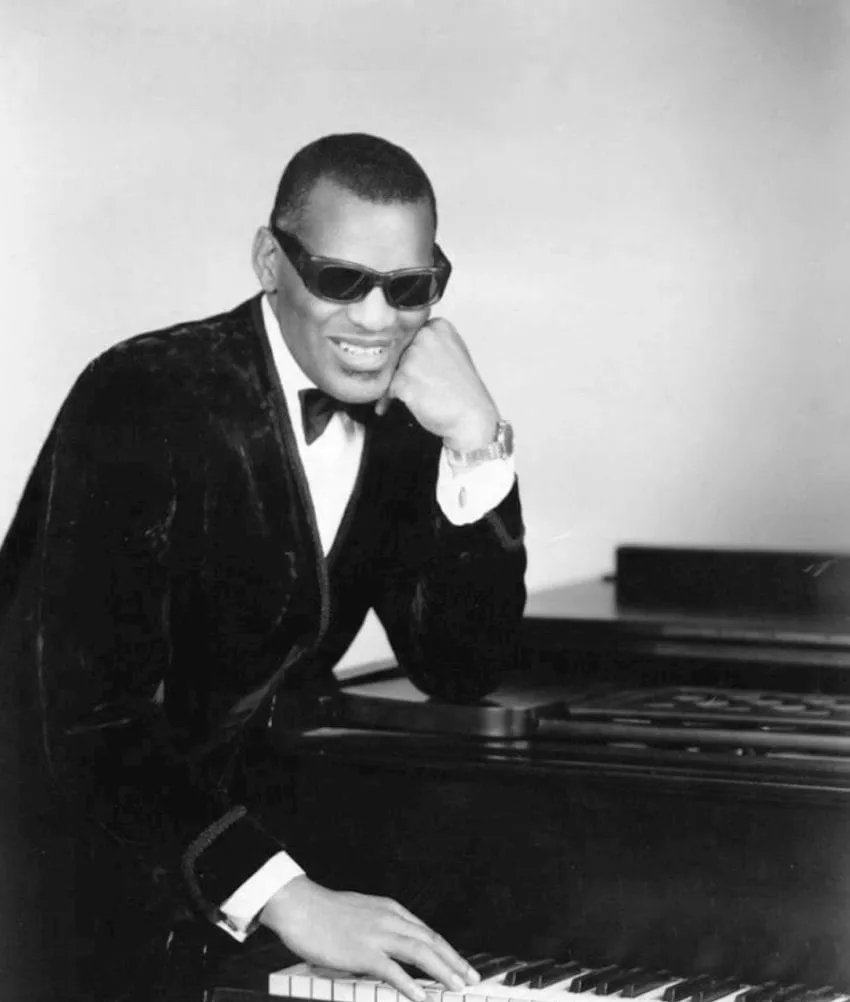
Ray Charles at the piano in a 1969 press photo. Maurice Seymour for the William Morris Agency, Wikimedia Commons, public domain.
OriginsAfrican American musicians in the United States in the 1940s.
The nameBillboard magazine adopted the term in June 1949 to replace “Race Records.”
The soundVocals, piano, one or two guitars, bass, drums, and saxophone.
TodaySince the 1980s, “R&B” has mainly meant contemporary R&B.
01
Start by listening
“What’d I Say” grew out of a gap in a set. One night in 1958, Ray Charles had played his entire set and still had about 12 minutes to fill. So he improvised. The electric piano starts the riff. Then Charles, the Raelettes, and the horns answer one another. Recorded for Atlantic in February 1959, the track hit No. 1 on the R&B sales chart and became his first gold record.
“What’d I Say” by Ray Charles (1959). Official audio released by Rhino in 2016.
02
Where the name came from
Until 1949, the American magazine Billboard used the label “Race Records” for its chart of records by Black musicians. Jerry Wexler, a journalist at the magazine, disliked the term and suggested a name that better fit the music. In June 1949, the chart became “Rhythm & Blues Records.”
The term covered a lot of ground. Writer Robert Palmer described it as a term for any music made by or for African Americans. Wexler later changed careers. In 1953, he became a partner at Atlantic Records.
03
The 1940s and 1950s
After the war, musicians from the big swing bands began playing in smaller groups. They kept the boogie-woogie bass lines, the loping rhythm, and the horn riffs. The sound was first called jump blues. Louis Jordan and his Tympany Five, formed in 1938, dominated the charts in 1948.
A typical band had a piano, one or two guitars, bass, drums, and saxophone, sometimes with backup singers. The bands rehearsed the arrangements until they sounded effortless. Small independent labels released this music, including Savoy, King, Imperial, Specialty, Chess, and Atlantic.
Ruth Brown in Washington in the mid-1990s. Photo by John Mathew Smith, Wikimedia Commons, licensed under CC BY-SA 2.0.
Ruth Brown had so many hits at Atlantic that people called the label “the house that Ruth built.” In New Orleans, Fats Domino released “The Fat Man” on Imperial in 1949. Atlantic bought Ray Charles’s contract in 1952.
04
From R&B to rock and roll
In March 1951, Ike Turner’s band recorded “Rocket 88” at Sam Phillips’s studio in Memphis. The record was credited to singer Jackie Brenston and reached No. 1 on the R&B sales chart. Many hear it as a milestone in rock and roll. Turner himself didn’t consider it rock and roll.
That same year in Cleveland, radio host Alan Freed began calling this music “rock and roll.” The two names meant much the same thing until around 1957. In 1955, Little Richard’s fast songs, including “Tutti Frutti,” helped define rock and roll. In 1957, Fats Domino said the music people were calling rock and roll was the rhythm and blues he’d been playing in New Orleans for fifteen years.
05
How the meaning changed
R&B in 2000 sounded different from R&B in 1950. The names Billboard used for its chart trace that shift.
June 1949
“Race Records” becomes “Rhythm & Blues Records.”
1969
In the early 1960s, people began calling this music soul. Billboard followed on August 23, 1969, when it renamed its chart “Best Selling Soul Singles.”
1982
The chart becomes “Hot Black Singles.” African American music had grown too varied for the term soul alone.
1986
Producer Teddy Riley blends R&B with hip-hop. The sound becomes known as new jack swing.
1990
On October 27, Billboard goes back to using R&B in the name, calling the chart “Hot R&B Singles.”
Late 1990s
Neo-soul brings back the sounds of 1970s soul with artists such as Erykah Badu, Lauryn Hill, and Maxwell.
When you hear “R&B” today, it usually means contemporary R&B, which took shape in the late 1970s and early 1980s. Synths and drum machines play alongside carefully arranged vocals, with singers often stretching one syllable across several notes. In the early 1990s, hip-hop soul brought that singing style to hip-hop beats.
06
Singers to listen to
Ruth Brown
Portsmouth, Virginia, United States
Ruth Brown was born in 1928 and died in 2006. Her 1950 hit “Teardrops from My Eyes” spent eleven weeks at No. 1 on the R&B sales chart and earned her the nickname Miss Rhythm. She later fought for musicians’ rights and royalties. Her efforts led to the founding of the Rhythm and Blues Foundation in 1988.
What to listen to “Teardrops from My Eyes” (1950), “(Mama) He Treats Your Daughter Mean” (1953), and “Miss Rhythm” (Atlantic, 1959).
Ray Charles was born in 1930 and died in 2004. He began losing his sight as a child and was completely blind by about age seven. He was at Atlantic from 1952 to 1959, recording “I Got a Woman” and “What’d I Say” there. People called him The Genius. He won 17 Grammy Awards and was among the first artists inducted into the Rock and Roll Hall of Fame in 1986.
What to listen to “What’d I Say” (Atlantic, 1959) and “The Genius of Ray Charles” (1959).
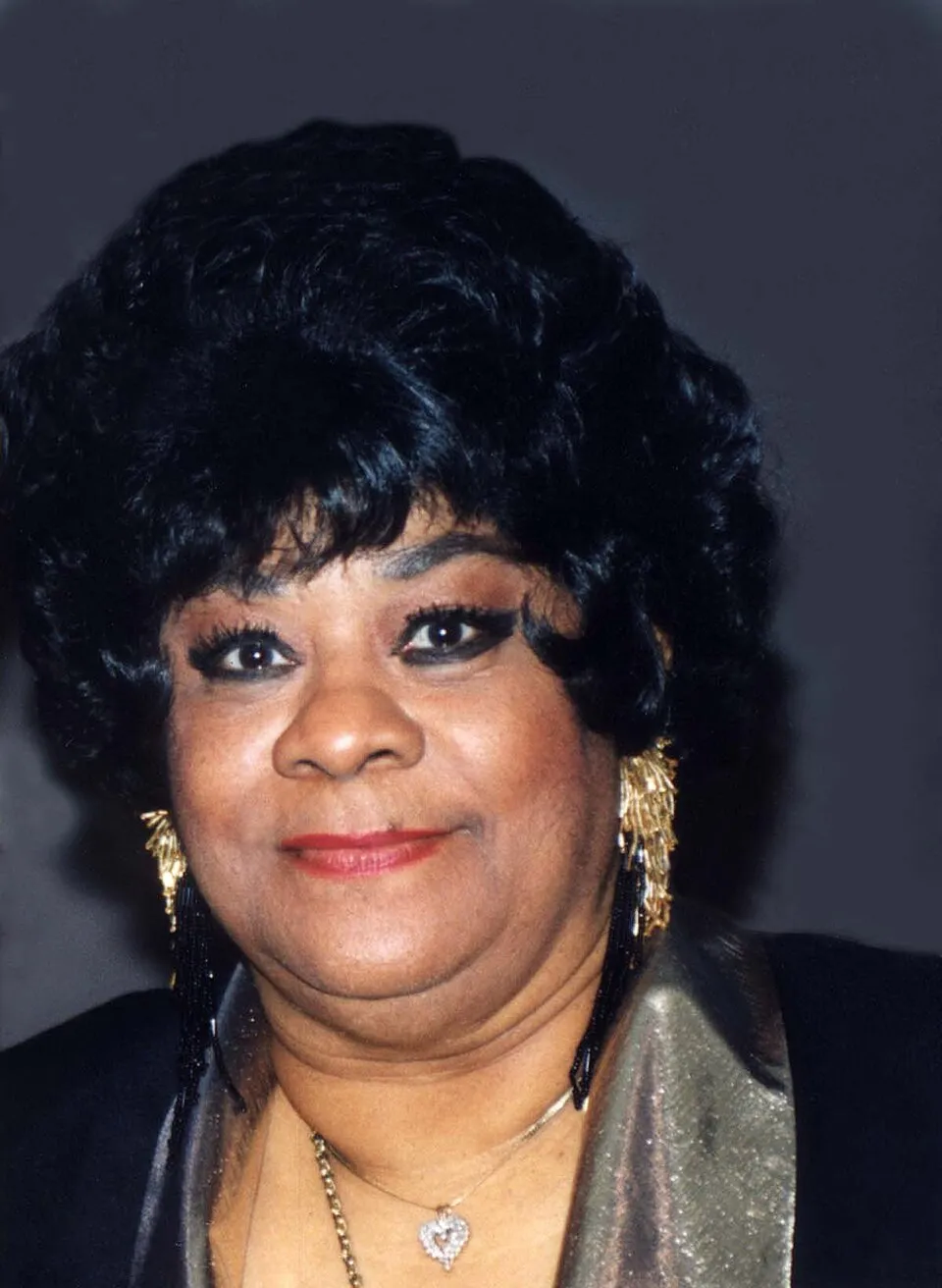
Born Jamesetta Hawkins in 1938, she died in 2012. Her first hit, “The Wallflower,” reached No. 1 on the R&B sales chart in 1955. She signed with Chess in 1960. Her song “At Last,” released in 1961, entered the Grammy Hall of Fame in 1999. She was inducted into the Rock and Roll Hall of Fame in 1993.
What to listen to “At Last!” (1960) and “Tell Mama,” her 1967 comeback.
Whitney Houston was born in 1963 and died in 2012. People called her “The Voice.” Arista released her debut album in February 1985, and it spent 14 weeks at No. 1 in the United States. She recorded “I Will Always Love You” for the 1992 film “The Bodyguard.” Dolly Parton wrote and originally sang the song. Houston’s version spent 14 weeks at No. 1 on the Hot 100.
What to listen to “Whitney Houston” (1985) and “I Will Always Love You” (1992).
Mary J. Blige was born in 1971. Her debut album, “What’s the 411?” (1992), was produced mainly by Sean Combs. It sets R&B ballads to hip-hop beats and samples. People call her the Queen of Hip-Hop Soul. “Family Affair,” produced by Dr. Dre, spent six weeks at No. 1 on the Hot 100 in 2001.
What to listen to “What’s the 411?” (1992), “My Life” (1994), and “No More Drama” (2001).
It’s a form of African American popular music that began in the United States in the 1940s. It blends blues and jazz with a strong beat. The name dates to 1949.
What does “R&B” mean?
It’s short for rhythm and blues. Since the 1980s, the term has mostly referred to contemporary R&B, with its synths, drum machines, and richly ornamented vocals.
What’s the difference between rhythm and blues and soul?
In the early 1960s, the music people had called rhythm and blues became known as soul. Billboard followed in 1969 by renaming its chart. Soul then developed a history of its own.
Did rhythm and blues give rise to rock and roll?
To a large extent, yes. In the early 1950s, radio host Alan Freed called the rhythm and blues he played on the air “rock and roll.” The two names overlapped until around 1957.
Who are some notable rhythm and blues singers?
For the 1950s, start with Ruth Brown, Ray Charles, Etta James, and Fats Domino. For contemporary R&B, try Whitney Houston, Mary J. Blige, and Lauryn Hill. You’ll find records from these artists above.