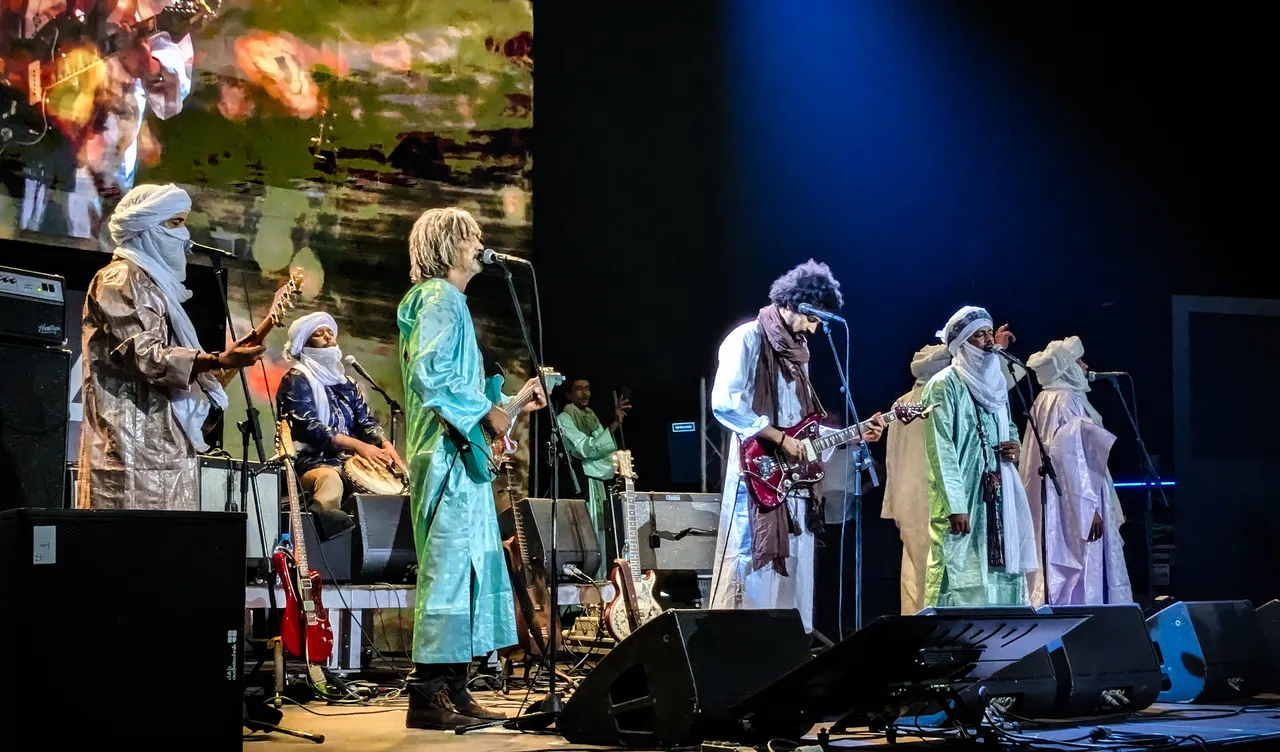
Electric guitars, bass, percussion, and voices singing in Tamasheq, the language of the Tuareg people. “Desert blues” took shape in the Sahara across Mali, Niger, and Algeria. Tinariwen took it all the way to the Grammy Awards.
LanguageTamasheq, the language of the Tuareg people.
The soundElectric guitars, bass, percussion, and a Tuareg name for it all, assouf.
MilestoneIn 2012, Tinariwen won a Grammy for “Tassili.”
01
Start listening
Start with “Erghad Afewo,” a track from “Hoggar,” Tinariwen’s tenth studio album, released in March 2026. Axel Digoix created the animated video and the album cover. The film follows two Tuareg children who grow up in a desert where music is censored. Through music, they become the voice of their people.
Tinariwen’s official video for “Erghad Afewo,” posted on the band’s YouTube channel in 2026.
02
The sound of the desert
The electric guitar is at the heart of desert blues. Notes buzz and repeating patterns settle into a groove over bass, drums, and percussion. A voice sings in Tamasheq over it all. The Tuareg have a word for this music, assouf. It roughly captures melancholy, loneliness, and the longing you feel when you’re far from home.
That longing has a history. In 1973, a severe drought drove Tuareg families into the cities, where many young men struggled to find work. They became known as ishumar, from the French word “chômeur,” meaning someone who is unemployed. They first played their music on acoustic guitars, then switched to electric. Another name for the music, tishoumaren, comes from the same word.
The music’s roots go back much further.
The imzad
Algeria, Mali, Niger
The imzad is a one-string fiddle. Women play it seated, resting it on their knees. They make it themselves from half a calabash covered with animal hide. UNESCO has listed the traditions associated with the imzad as intangible cultural heritage since 2013.
The tindé and the teherdent
The Tuareg Sahara
The tindé is a drum made from a mortar, and the teherdent is a three-string lute. Both are part of the roots of desert blues, along with calabash percussion.
03
The story of Tinariwen
Tinariwen pioneered desert blues. The band’s name is the plural of ténéré, the Tamasheq word for desert. Before the musicians had a band name, people called them Kel Tinariwen, “the people of the deserts.”
1963
In Mali, Ibrahim Ag Alhabib was four when he saw his father, a Tuareg rebel, executed during the uprising. Later, after watching a Western in a makeshift movie theater, he built his first guitar from an oil can, a stick, and a bicycle brake cable.
1979
In Tamanrasset, in southern Algeria, Ibrahim began singing and writing songs on guitar with his friends. That’s where Tinariwen began.
1980s
The band gave its songs to anyone who brought a blank cassette. Copies passed from hand to hand and from camp to camp across the Sahara.
2001
In January, Tinariwen played at the first Festival au Désert in Tin Essako, east of Kidal, Mali. Later that year, “The Radio Tisdas Sessions” became the band’s first record released outside North Africa.
2012
“Tassili,” released in 2011, won the Grammy for Best World Music Album.
2026
On March 13, Tinariwen released its tenth studio album, “Hoggar,” on the band’s label, Wedge. It features Sudanese artist Sulafa Elyas and singer José González.
The band members say they first heard American blues while touring in the early 2000s. Back home, they call their music assouf.
What to listen to “Tassili” (2011) and “Hoggar” (Wedge, 2026).
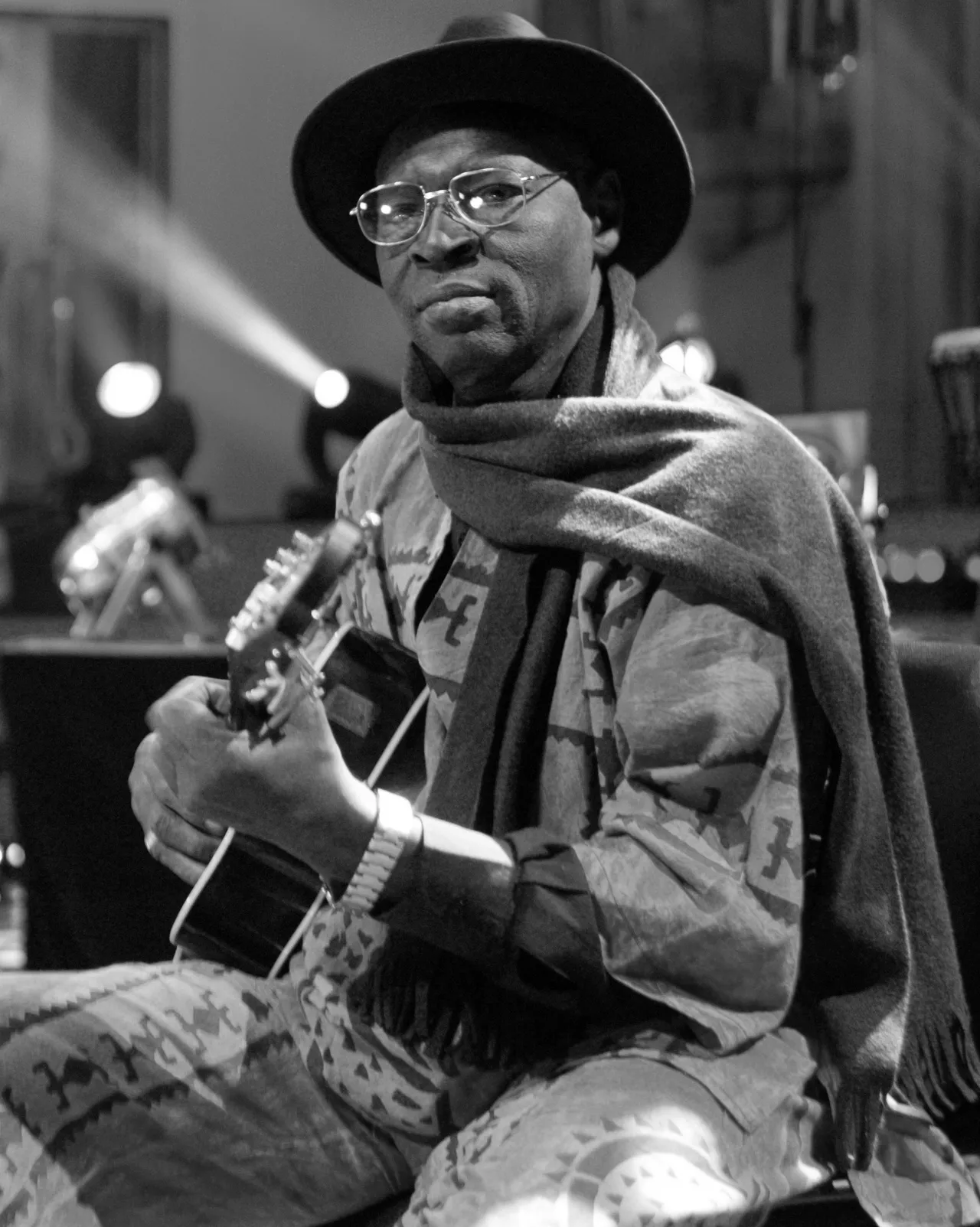
Another major source of desert blues lies along the Niger River. Ali Farka Touré was born in 1939 in Kanau, on the banks of the river in northwestern Mali. He was Songhai and sang mainly in Songhai and Fula. He later lived in the small town of Niafunké, where he became mayor in 2004.
Ali Farka Touré in 2005. Photo by Tagles, Wikimedia Commons, public domain.
He started out on local instruments, including the njarka, a one-string fiddle, and the ngoni, a four-string lute. In 1968, he represented Mali at a festival in Sofia, Bulgaria, where he bought a guitar. That same year, John Lee Hooker’s blues made a strong impression on him. Touré heard African roots in the blues. People often called him “the African John Lee Hooker.”
He recorded his landmark albums with World Circuit. “Talking Timbuktu,” with American guitarist Ry Cooder, came out in 1994. He recorded “Niafunké” (1999) in an abandoned school in his town. Two collaborations with kora player Toumani Diabaté followed. Touré won three Grammy Awards, in 1995, 2006, and 2011. He died in Bamako in 2006. Today, his son Vieux Farka Touré carries on his guitar tradition on stages around the world.
What to listen to “Talking Timbuktu,” with Ry Cooder (World Circuit, 1994), and “Niafunké” (World Circuit, 1999).
Other musicians followed in Tinariwen’s footsteps, from Niger to Mali. Here are four names to keep you listening.
Bombino
Agadez region, Niger
Omara Moctar, known as Bombino, was born in 1980 in Tidene, a Tuareg camp northeast of Agadez. While his family was in exile, he taught himself to play on a guitar left behind by relatives. He sings in Tamasheq. His album “Deran” earned a Grammy nomination in 2019.
What to listen to “Nomad,” produced by Dan Auerbach in Nashville (Nonesuch, 2013), and “Deran” (Partisan, 2018).
Born Mahamadou Souleymane, he made his first guitar from wood and a bicycle brake cable. His early recordings spread from phone to phone across the Sahel. Today, he plays a white Stratocaster left-handed and sings in Tamasheq.
What to listen to “Afrique Victime” (Matador, 2021) and “Funeral for Justice” (Matador, 2024).
Ousmane Ag Mossa and Cheikh Ag Tiglia founded Tamikrest in Kidal in 2006. They came from Tinzaouaten, on the border between Mali and Algeria. The band’s name means “connection” or “union” in Tamasheq. Its music blends the guitar style of the ishumar with blues, dub, and psychedelic rock.
What to listen to “Chatma” (2013) and “Assikel” (Glitterbeat, 2026).
In 2012, armed groups took control of northern Mali and banned music there. Garba, Aliou, and Oumar Touré, three Songhai musicians from the north, left for Bamako. There they formed Songhoy Blues with drummer Nathanael Dembélé. Garba’s father played percussion with Ali Farka Touré.
What to listen to “Music in Exile” (Transgressive, 2015) and “Héritage” (2025), which features Malian musicians.
Desert blues is music from the Sahara, played by Tuareg musicians from Mali, Niger, and Algeria. It blends Tuareg musical traditions with electric guitars and rock. The Tuareg call it assouf or tishoumaren.
What is traditional Tuareg music?
Before guitars, there was the imzad, a one-string fiddle played by women, the tindé, a drum made from a mortar, and the teherdent, a three-string lute. The imzad accompanies songs that celebrate heroes of the past in verse, often at ceremonies in Tuareg camps.
What does Tinariwen mean?
Tinariwen is the plural of ténéré, the Tamasheq word for desert. Early on, people called the band Kel Tinariwen, “the people of the deserts.”
What language does Tinariwen sing in?
Tamasheq, the language of the Tuareg people. Bombino and Mdou Moctar also sing in Tamasheq.
Does desert blues come from American blues?
There’s no direct line from American blues to desert blues. Tinariwen’s members say they first heard American blues on tour in the early 2000s. Ali Farka Touré heard African roots in the blues.