Three chords, twelve bars, and notes that bend. Blues music began in the late 19th century among African Americans in the South. It went electric in Chicago, and today you can hear its form in jazz, rhythm and blues, and rock.
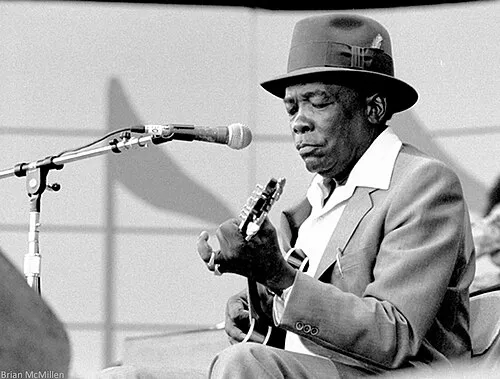
John Lee Hooker at the Monterey Jazz Festival, 1981. Photo by Brian McMillen, Wikimedia Commons, licensed under CC BY-SA 4.0.
OriginsAfrican American communities in the southern United States in the late 19th century.
The formUsually 12 bars, three chords, and lyrics in an AAB pattern.
The soundBlue notes are notes sung or played a little lower than you might expect.
The legacyYou can hear its form throughout jazz, rhythm and blues, and rock.
01
Listen first
B.B. King was 84 when he played “The Thrill Is Gone” at the 2010 Crossroads Guitar Festival near Chicago. It’s a slow 12-bar blues in B minor. You’ll find an explanation of the chord pattern below.
“The Thrill Is Gone” (live), B.B. King at the 2010 Crossroads Guitar Festival, released by Rhino.
02
Born in the South
The blues began among African Americans in the southern United States. Its earliest traces date from the 1860s to the 1890s. It draws on work songs and field hollers, calls that rang out across the fields. Its name may come from the English expression “blue devils,” a name for the demons of melancholy.
The Mississippi Delta was one of the places where the blues first took shape. It’s a region of cotton fields in northwestern Mississippi between the Mississippi and Yazoo rivers. The Mississippi River’s delta is in Louisiana.
Guitar and harmonica were the main instruments there. Slide guitar was a signature sound, made by sliding an object across the strings. Around 1903, at the Tutwiler train station, musician W.C. Handy heard a man play guitar with a knife against the strings. Handy later wrote that it was “the weirdest music” he had ever heard.
03
Twelve bars, three chords
The usual blues form uses 12 bars and three chords. They’re called I, IV, and V because they’re built on the first, fourth, and fifth notes of the scale. In C, those chords are C, F, and G.
1Over four bars of I, the singer sings a line (A).
2Over two bars of IV and two of I, the singer repeats the line (A).
3Over V, IV, I, and V, a new line answers it (B).
Then come the blue notes. The third, fifth, and seventh are sung or played a little lower than expected, by up to a half step. That sound between major and minor gives the blues its color.
The blues also draws on call and response from African music. In Muddy Waters’s “Mannish Boy,” the harmonica and the rhythm section answer each line he sings.
The pattern leaves room for variation. The verses in Robert Johnson’s “Cross Road Blues” run from 14 to 15 bars.
04
African roots
The blues emerged among descendants of enslaved Africans. How much does it owe to Africa? Historians debate the question.
Paul Oliver and Samuel Charters argue that core elements of the blues came from the Sahel through the slave trade. In “Africa and the Blues” (1999), ethnomusicologist Gerhard Kubik traces its roots to the Sudan belt, a band of savanna that stretches across Africa from Senegal. He also proposes an African origin for blue notes. Both Kubik and Sylviane Diouf hear the influence of West African Islamic musical traditions in the blues.
Other historians find little evidence of influences from south of the Sahel. They point out that the blues form differs from the melodies of griots. A direct ancestor in African music has yet to be identified.
For another perspective from the Sahara, listen to the desert blues of Ali Farka Touré and Tinariwen.
05
From the Delta to Chicago
From the 1910s to the 1970s, about six million African Americans left the rural South for cities in the North and West. Many Delta blues musicians moved to Chicago, and the sound of the blues changed.
1912
Hart Wand’s “Dallas Blues” becomes the first blues composition registered for copyright. W.C. Handy publishes “The Memphis Blues.”
1920
Mamie Smith records “Crazy Blues,” which becomes a hit. The 1920s bring singers such as Bessie Smith to prominence.
1936 and 1937
Robert Johnson records his 29 songs, first in San Antonio and then in Dallas, Texas.
1941
Alan Lomax records Muddy Waters in the Delta for the Library of Congress.
1948
In Chicago, Muddy Waters switches to electric guitar and scores a hit with “I Can’t Be Satisfied” on Aristocrat, which later becomes Chess Records.
1951
Howlin’ Wolf, who learned from Charley Patton, records in Memphis for Sam Phillips, then joins Chess.
In Chicago clubs, musicians need to be heard. They start amplifying their guitars and harmonicas. World War II marks the shift to electric blues.
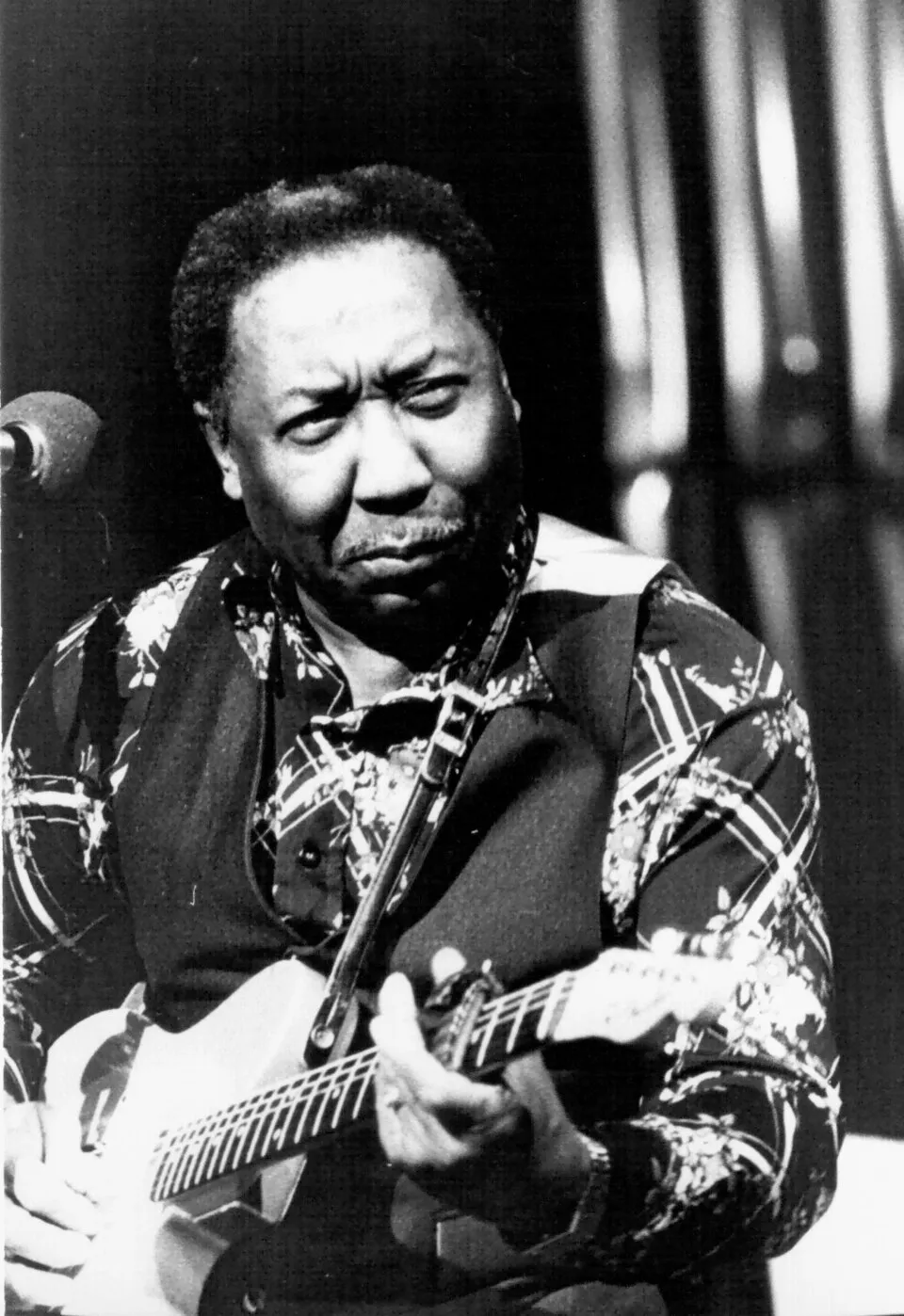
Muddy Waters at the Maison de la Radio in Paris, 1976. Photo by Lionel Decoster, Wikimedia Commons, licensed under CC BY-SA 4.0.06
Voices of the blues
Bessie Smith
Tennessee, United States
Known as the Empress of the Blues, she signed with Columbia in 1923 and released the hit “Downhearted Blues” that same year. She died in 1937 after a crash on Highway 61.
Listen “Downhearted Blues” (1923) and “Nobody Knows You When You’re Down and Out” (1929).
Born in Hazlehurst, probably in 1911, he died at 27 and left behind just 29 songs. Legend has it that he made a deal with the devil at a crossroads, though his song “Cross Road Blues” makes no mention of it.
Listen “Cross Road Blues,” “Sweet Home Chicago,” and “King of the Delta Blues Singers” (1961).
McKinley Morganfield grew up in Stovall, near Clarksdale. He settled in Chicago in 1943 and is often called the father of modern Chicago blues. The Rolling Stones took their name from his song “Rollin’ Stone.”
Listen “Hoochie Coochie Man” (1954) and “At Newport 1960” (live).
Born near Tutwiler or Clarksdale, he worked for Ford in Detroit in 1943. There he developed an electric boogie with a beat he stamped out with his foot. “Boogie Chillen’” put him on the map in 1948.
Listen “Boom Boom” (1962) and “The Healer” (1989), with Carlos Santana and Bonnie Raitt on the latter.
Riley B. King was born in 1925 near Itta Bena. As a DJ in Memphis, he became known as the “Beale Street Blues Boy,” later shortened to B.B. He named his guitar Lucille after a woman at the center of a fight that set fire to the venue where he was playing. He won 15 Grammy Awards.
Listen “Live at the Regal” (1964) and “The Thrill Is Gone” (1969).
The blues began among African Americans in the southern United States in the late 19th century. You can recognize it by its 12-bar chord pattern, blue notes, and call and response.
What is Delta blues?
Delta blues is an early blues style from the Mississippi Delta. It features guitar, harmonica, and slide guitar. Artists include Charley Patton, Son House, and Robert Johnson.
What are the different types of blues music?
Rural styles include Delta blues and Piedmont blues. Urban styles include Chicago blues and West Coast blues.
Who are some well-known blues singers?
Bessie Smith, Robert Johnson, Muddy Waters, Howlin’ Wolf, John Lee Hooker, B.B. King, and, today, Christone “Kingfish” Ingram.