Flamenco was born in Andalusia and shaped by the Romani community. Listen for the singer and the guitar, the clap of hands and the tap of heels on the floor.
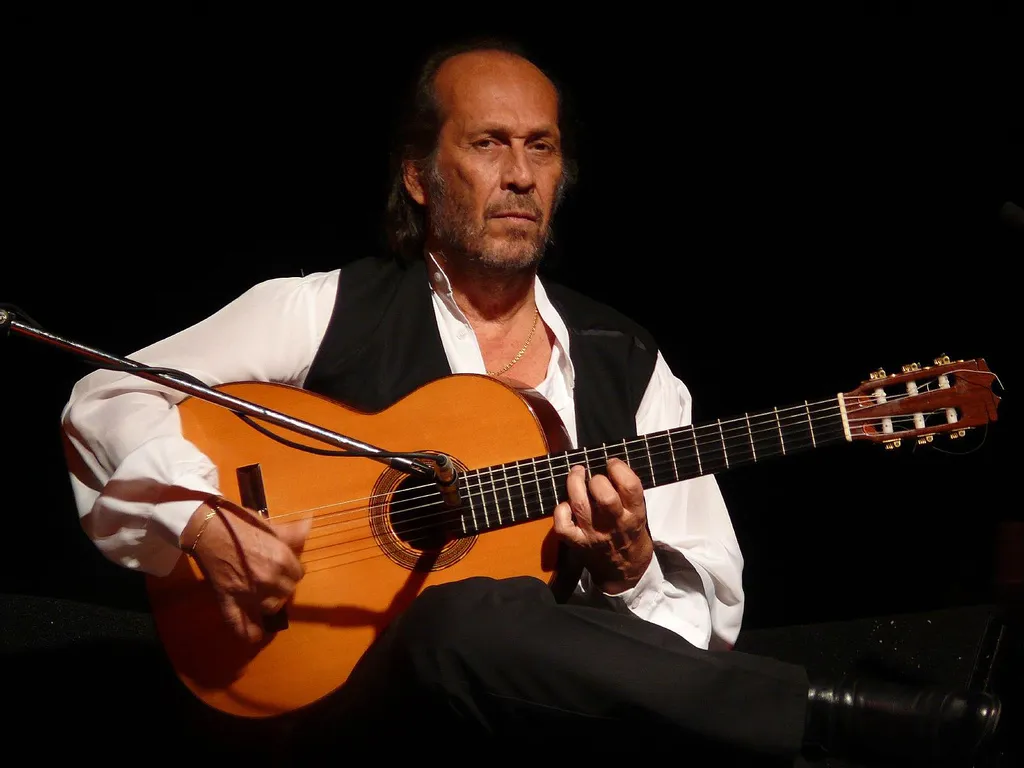
Paco de Lucía at the PLAI Festival in Timișoara, Romania, in 2007. Photo by Cornel Putan, Wikimedia Commons, licensed under CC BY 2.0.
BirthplaceAndalusia in southern Spain, with roots in Murcia and Extremadura.
Three pillarsSinging (cante), guitar playing (toque), and dance (baile).
RhythmEach form has its own rhythmic cycle, called the compás. The 12-beat cycle is the usual pattern.
HeritageUNESCO added flamenco to its list of the intangible cultural heritage of humanity in 2010.
01
Listen first
This film accompanies flamenco’s 2010 inscription on UNESCO’s intangible heritage list. The Andalusian Agency for the Development of Flamenco produced the film.
“Flamenco,” Andalusian Agency for the Development of Flamenco (2009). Published by UNESCO in 2010.
02
Andalusian and Romani roots
Flamenco comes from Andalusia in southern Spain. UNESCO identifies Andalusia as the heart of the art form, which also has roots in Murcia and Extremadura. Flamenco developed within the Andalusian Romani community, which played a central role in its history.
Flamenco is thought to have emerged in Lower Andalusia in the late 18th century. Seville’s Triana neighborhood is often cited as its birthplace. Scholars still debate its earlier roots. They point to Arab-Andalusian music, dances and scales brought from India by migrating Roma, and African influences.
03
Singing, guitar, and dance
Singing, or cante
Singing is at the heart of flamenco. Men and women usually sing seated, without a backing chorus. The lyrics are short and simple, and they express a full range of emotions, from sorrow to joy. A flamenco singer is called a cantaor.
Guitar playing, or toque
For a long time, the guitar mainly accompanied the singer. Its role has since grown well beyond accompaniment. A flamenco guitar is lighter than a classical guitar. It has a thinner soundboard, a smaller body, and strings that sit closer to the neck. It sounds brighter and more percussive. It often has a plate called a golpeador to protect the soundboard from finger taps.
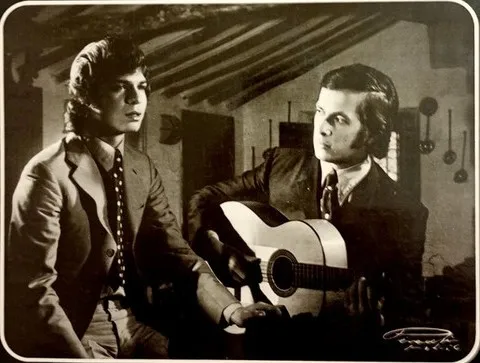
Camarón de la Isla (left) and Paco de Lucía on their 1969 album. Photo by Pérez de León, Wikimedia Commons, public domain.
Dance, or baile
Baile conveys passion and seduction, with moods ranging from sadness to joy. The dancer, called a bailaor, strikes the floor with heels and toes. This footwork is called zapateado. Handclaps, known as palmas, and sometimes castanets keep time. The cajón, a percussion instrument from Peru, joined them later. Paco de Lucía discovered it in Peru in the late 1970s, and his sextet featured it on “Sólo quiero caminar” (1981).
04
Compás and palos
The compás is the rhythmic cycle of a piece. Without a guitar, you can mark it with palmas or by tapping on a table. The 12-beat cycle is the usual pattern. The accented beats vary from one form to another. In bulerías, the accents usually fall on beats 3, 6, 8, 10, and 12.
Each form is called a palo. There are more than 50, grouped into three families. Cante jondo means “deep song.” Cante chico is the lighter style, with cante intermedio between the two.
Deep songs
Soleá, seguiriya
Their solemn character places them in the cante jondo family. Soleá and seguiriya both use a 12-beat cycle, with accents falling on different beats.
Songs for celebrations
Alegrías, bulerías, tangos
Alegrías are dance songs from Cádiz. Bulerías emerged in Jerez’s Romani community in the 19th century. Fast and open to improvisation, they often close out celebrations. Tangos follow a four-beat cycle.
05
From 1774 to UNESCO
1774
Writer José Cadalso provides the earliest known written record of flamenco music in “Cartas marruecas.”
1847
An article in the newspaper El Espectador uses “flamenco” for this music for the first time, calling it a “Romani genre.”
1881
Silverio Franconetti opens the first singing café devoted entirely to flamenco in Seville. In these cafés cantantes, singing becomes a profession.
1922
Composer Manuel de Falla and poet Federico García Lorca organize a cante jondo competition at the Alhambra in Granada to preserve the old songs.
1979
Camarón de la Isla releases “La leyenda del tiempo,” featuring electric bass, sitar, and poems by Lorca. The album initially unsettles purists and later becomes a classic.
2010
On November 16, UNESCO meets in Nairobi and adds flamenco to the Representative List of the Intangible Cultural Heritage of Humanity.
UNESCO recognizes flamenco as part of the identity of many communities, especially the Romani community. Performers, families, social groups, and flamenco clubs pass it from one generation to the next.
06
Artists to listen to
Camarón de la Isla
San Fernando, Spain · singing
Born José Monje Cruz in 1950, he grew up in a Romani family in San Fernando, in the province of Cádiz. His father was a singer and blacksmith. From 1969 to 1977, he recorded about ten albums with Paco de Lucía, then went on to work with guitarist Tomatito. He died in 1992 at 41.
Listen to “Arte y majestad” with Paco de Lucía (1975) and “La leyenda del tiempo” (1979).
Francisco Sánchez Gómez was born in Algeciras in 1947. His rumba “Entre dos aguas,” improvised in the studio for “Fuente y caudal” (1973), became a hit. He opened flamenco up to other styles of music and played in a trio with John McLaughlin and Al Di Meola. In 2004, he received the Prince of Asturias Award for the Arts. He died in Mexico in 2014.
Listen to “Fuente y caudal” (1973) and “Friday Night in San Francisco” with Al Di Meola and John McLaughlin (1981).
She was born in 1918, though some sources say 1913, into a Romani family in Barcelona’s Somorrostro neighborhood. Her father was a guitarist. She is described as the first woman to master footwork previously reserved for leading male dancers. In 1941, she performed at Carnegie Hall in New York with guitarist Sabicas. She died in 1963.
Listen to “Carmen Amaya, año 1948-50.” You can also watch her final film, “Los Tarantos” (1963).
Born in 1980 in Las Gabias, in the province of Granada, she is the daughter of singer Enrique Morente. In 1994, he became the first flamenco singer to receive Spain’s National Music Prize. Her debut album came out in 2001. In the 2006 film “Volver,” Penélope Cruz appears on screen singing flamenco. The voice you hear is Morente’s.
Listen to “Mi cante y un poema” (2001) and Enrique Morente’s “Omega” (1996).
An art form born in Andalusia that brings together singing (cante), guitar playing (toque), and dance (baile). Each piece follows a palo, a form with its own rhythmic cycle, the compás.
Where did flamenco originate?
Flamenco emerged in Lower Andalusia in the late 18th century and developed within the Andalusian Romani community. Its earlier roots are still debated.
Where does the word “flamenco” come from?
Its origin is uncertain. The word was also once used to refer to Romani people. One theory links it to Flanders, and another to the flamingo. Most specialists reject the Arabic origin proposed by Blas Infante because the word only appears in the 19th century.
What is a flamenco guitar?
A flamenco guitar is lighter than a classical guitar and has a brighter sound. It is often made of cypress and spruce. It usually has a golpeador, a plate that protects the soundboard from finger taps.
What is flamenco dancing called?
It’s called baile. The dancer is a bailaor, and the footwork that strikes the floor is called zapateado.
Which flamenco artists should you start with?
Start with Camarón de la Isla for singing, Paco de Lucía and Tomatito for guitar, Carmen Amaya for dance, and Estrella Morente for a voice from Granada.
Sources
UNESCO, Flamenco, Representative List of the Intangible Cultural Heritage of Humanity (2010), and Decision 5.COM 6.39, Nairobi.
Flamenco, English Wikipedia, and Flamenco, French Wikipedia (origins, etymology, Cadalso, El Espectador, cafés cantantes, Triana, and the cajón). See also Concurso de Cante Jondo.