Before audiences around the world knew his voice, Bob Marley was a boy in a Jamaican hill village. He grew up in Kingston, formed a vocal trio with two friends and made records with the Wailers that traveled far beyond the island. He did it all in 36 years, from 1945 to 1981.
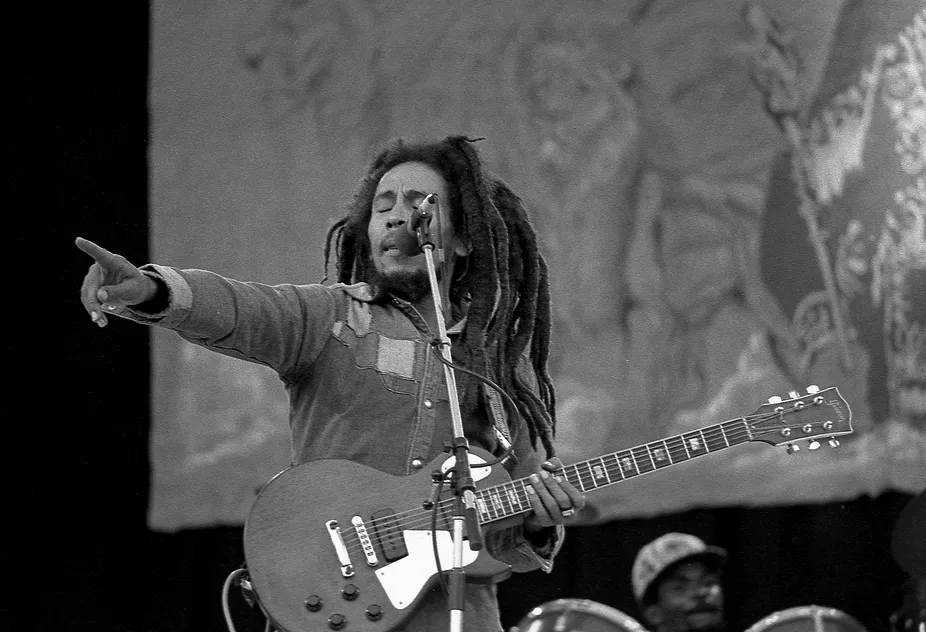
Bob Marley at Dalymount Park on July 6, 1980. Photo by Eddie Mallin, Wikimedia Commons, licensed under CC BY 2.0.
BornFebruary 6, 1945, in Nine Mile, Saint Ann Parish, Jamaica.
BandThe Wailers, formed in 1963 with Peter Tosh and Bunny Wailer.
Record“Legend” (1984) is the bestselling reggae album of all time, according to Guinness World Records.
DiedMay 11, 1981, in Miami, at age 36. The cause was melanoma, a form of skin cancer.
01
Listen first
To hear Marley onstage, spend an evening at London’s Rainbow Theatre. This is June 4, 1977, the last night of a four-show run on the European tour for “Exodus.” Listen for “Trenchtown Rock,” “Burnin’ and Lootin’” and “No Woman, No Cry.” He saves “Exodus” itself for the close.
“Live at the Rainbow,” the complete concert from June 4, 1977, shared on Bob Marley’s official channel in 2020.
02
Nine Mile and Trenchtown
Robert Nesta Marley was born on February 6, 1945, on his maternal grandfather’s farm in Nine Mile, a mountain village in Saint Ann Parish. His mother, Cedella Malcolm, was 18. His English father, Norval Marley, called himself “Captain.” He rarely saw the family and died when Bob was ten.
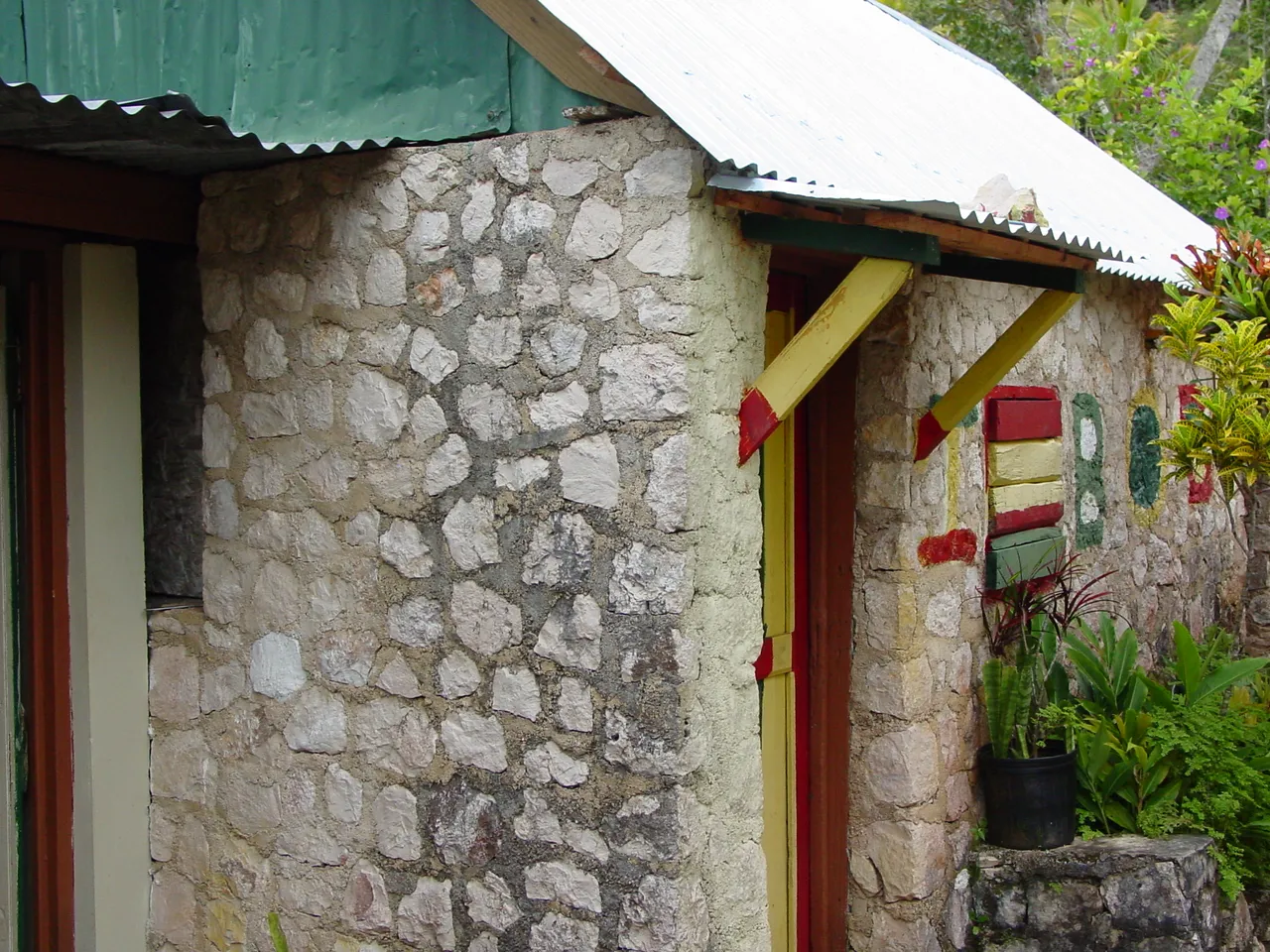
A house in Nine Mile where Bob Marley lived as a child. Photo by david_e_waldron, Wikimedia Commons, licensed under CC BY-SA 2.0.
Around the age of 12, in the late 1950s, Bob joined his mother in Kingston. They lived in Trenchtown, a poor neighborhood in the west of the city. There he earned the nickname Tuff Gong and began learning his craft. A neighbor, the singer Joe Higgs, encouraged him, showed him how to play guitar and gave him singing lessons.
03
The Wailers
The Wailers began as a vocal trio in Trenchtown. Within a decade, they had signed with Island and their records were reaching listeners overseas.
1963
Bob Marley, Bunny Wailer and Peter Tosh formed the Wailing Wailers. They recorded for Studio One, the label run by producer Clement “Coxsone” Dodd.
February 1964
“Simmer Down” reached number one in Jamaica. In 1966, Bob married fellow singer Rita Anderson.
1970
The Wailers recorded “Soul Rebels” with producer Lee “Scratch” Perry and founded a label of their own. They called it Tuff Gong, after Bob’s nickname.
1972 and 1973
Island Records founder Chris Blackwell advanced the band £4,000 for an album. “Catch a Fire” came out in April 1973, followed by “Burnin’” in October.
1974 and 1975
The three singers went their separate ways. Bob continued as Bob Marley and the Wailers, with the I Threes on backing vocals: Rita Marley, Judy Mowatt and Marcia Griffiths. A live version of “No Woman, No Cry,” recorded in London in 1975, became his first hit outside Jamaica.
04
Albums to start with
Between 1973 and 1980, Marley released an album on Island almost every year. There was “Natty Dread” (1974), then “Rastaman Vibration” (1976), his first US hit album. “Kaya” and the live “Babylon by Bus” both arrived in 1978, followed by “Survival” in 1979. “Confrontation” came out after his death, in 1983. For a first listen, try these four records.
Catch a Fire
April 1973, Island Records
The Wailers made their first Island album at Harry J Studio in Kingston. Work continued in London with Bob overseeing the sessions. “Catch a Fire” entered the Grammy Hall of Fame in 2010.
Listen for “Concrete Jungle,” “Stir It Up,” “Slave Driver.”
After the attack on his home in December 1976, Marley left Jamaica for London, where he recorded “Exodus.” It spent 56 consecutive weeks on the UK charts. In 1999, Time named it the best album of the 20th century.
Listen for “Natural Mystic,” “Jamming,” “Three Little Birds,” “One Love.”
This was the last album released during Marley’s lifetime. On the tour that followed, he played Milan’s San Siro stadium to 100,000 people, the largest audience of his career.
Listen for “Could You Be Loved,” “Redemption Song.”
This Bob Marley and the Wailers collection came out three years after his death. Guinness World Records lists it as the bestselling reggae album of all time. If you’re getting to know his music, it’s an easy place to start.
Marley sang about love, rebellion and unity. He embraced the Rastafari faith in 1966 after Ethiopian Emperor Haile Selassie visited Jamaica. As violence between political factions divided the island, Marley also began speaking up for peace.
On December 3, 1976, two days before the free Smile Jamaica concert, gunmen opened fire at his home in Kingston. Bob suffered a minor injury. Rita was hit, and his manager, Don Taylor, was seriously wounded. Two days later, Bob went onstage as planned.
The One Love Peace Concert
Kingston, April 22, 1978
At the National Stadium, Marley invited political rivals Michael Manley and Edward Seaga onstage and brought their hands together. That June, the United Nations awarded him a peace medal.
Zimbabwe’s independence
Zimbabwe, April 1980
Invited to celebrate the country’s independence, Marley played at Rufaro Stadium. A free concert there drew close to 80,000 people.
06
His final years
In July 1977, after a soccer injury, doctors found a melanoma under the nail of Marley’s big toe. He declined amputation on religious grounds and kept performing.
On September 21, 1980, Marley collapsed while jogging in New York’s Central Park. The cancer had spread to his brain, lungs and liver. Two days later, on September 23, he played his last concert at Pittsburgh’s Stanley Theater. He later sought treatment at Dr. Josef Issels’ clinic in Germany.
Marley died at Cedars of Lebanon Hospital in Miami on May 11, 1981. He was 36. Jamaica held a state funeral on May 21. Prime Minister Edward Seaga and opposition leader Michael Manley both attended. Hundreds of thousands of people lined the road from Kingston to Nine Mile, where Marley was laid to rest in a mausoleum.
07
His legacy
Shortly before he died, Jamaica awarded Marley the Order of Merit. The Rock and Roll Hall of Fame inducted him in 1994, crediting him with bringing reggae to a worldwide audience. He received a Grammy Lifetime Achievement Award in 2001.
Marley’s official website recognizes 11 children, among them Ziggy, Stephen, Julian, Ky-Mani and Damian. In Kingston, Rita Marley turned the house at 56 Hope Road, where Bob lived from 1975 to 1981, into the Bob Marley Museum.
08
Keep listening
Visit the official pages to hear more or read about Marley’s life.
He died of melanoma, a skin cancer first found beneath his big toenail in 1977. It spread to his brain, lungs and liver.
When did Bob Marley die, and how old was he?
He was 36 when he died on May 11, 1981, in a hospital in Miami, Florida.
Where was Bob Marley from?
He was born in Nine Mile, Saint Ann Parish, Jamaica, on February 6, 1945. His mother, Cedella Malcolm, was Jamaican, and his father, Norval Marley, was English. Marley grew up in Nine Mile and later in Trenchtown, Kingston.
Which Bob Marley albums should I listen to first?
Try “Legend” for the hits, then “Exodus,” “Catch a Fire” and “Uprising.” You’ll find all four above.
Was Bob Marley a Rastafarian?
Yes. He embraced the Rastafari faith in 1966, after Ethiopian Emperor Haile Selassie visited Jamaica.
Who was his wife, and how many children did he have?
He married singer Rita Anderson in 1966. His official website recognizes 11 children, including Ziggy, Stephen, Julian, Ky-Mani and Damian Marley.
Sources
Bob Marley’s official website, History (biography, albums, the attack, concerts, funeral and tributes).
Bob Marley, English Wikipedia, and Bob Marley, French Wikipedia (childhood, career, illness, death and family).