A listening guide for when you want to relax, work, or take a breather
A kora in conversation with a trumpet, three ouds, a solo piano, and a voice from Cape Verde. Explore seven gentle albums from Africa, the Middle East, Latin America, and Asia, grouped by mood. You’ll also find out what research says about music and relaxation and where the evidence stops.
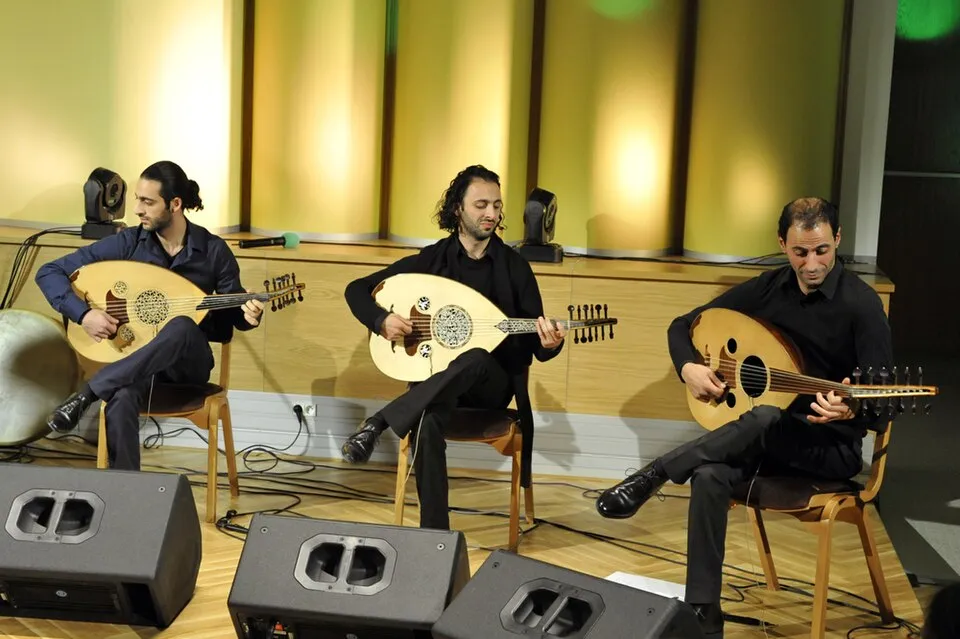
Le Trio Joubran performing at the Polish Radio studio in Warsaw in 2013. Photo by Henryk Kotowski, Wikimedia Commons, licensed under CC BY-SA 3.0.
TempoIn one study, people breathed faster and their heart rates rose as the tempo picked up.
SilenceIn the same study, two minutes of silence had a greater relaxing effect than the music.
EvidenceA 2020 review of 104 trials found a measurable effect on stress. Listening can be one way to unwind.
The selectionSeven albums from 1974 to 2024, from Senegal to Japan and from Nazareth to Brazil.
01
Listen first
“Kongo Magni” is the title track of the 2005 album by Malian guitarist and singer Boubacar Traoré. Below, you’ll meet the guitarist behind the song.
“Kongo Magni” by Boubacar Traoré. Music video released by his label, Lusafrica.
02
What makes music calming
We don’t all unwind to the same music. Researchers have measured what happens in the body when people listen. In 2006, the British medical journal Heart published a study of 24 people, 12 musicians and 12 non-musicians. The researchers measured their breathing, blood pressure, and heart rate as they listened to six styles of music.
As the tempo picked up, participants breathed faster and their blood pressure and heart rate rose. Slow music could help listeners relax. The surprise came during the breaks. Two minutes of silence, inserted at random between tracks, brought those readings below their starting levels.
A 2020 review brought together 104 controlled trials with 9,617 participants. It found that listening to music had a measurable effect on stress. The effect was clearest in how people described their stress. Among physical measures, it showed up mainly in heart rate.
The US National Center for Complementary and Integrative Health, or NCCIH, points out that firm conclusions are still rare and many studies involve small groups. Soft music may help you unwind. Rest and medical care still have their place.
For this guide, we picked recordings with small groups of musicians and room between the notes. Just instruments and voices.
03
Kora and guitar from West Africa to help you relax
A kora player from Senegal and a guitarist from Mali. On these two albums, the strings take the lead with little accompaniment.
Ablaye Cissoko and Volker Goetze
Senegal and Germany, kora and trumpet
Born in Kolda, Senegal, in 1970, Ablaye Cissoko sings and plays the kora, a West African harp with 21 strings. He recorded three albums as a duo with German trumpeter Volker Goetze. On “Amanké Dionti,” you hear mostly his voice, his kora, and the trumpet. Percussion joins them on just one track.
Listen to “Amanké Dionti” (Motéma, 2012) and “Sira” (2008).
Born in Kayes in 1942, he earned the nickname “Kar Kar” (“dribble, dribble”) for his skill on the soccer field. At 17, he taught himself guitar in secret. By the early 1960s, he was a star in newly independent Mali and had yet to make a record. He disappeared from the airwaves after 1968 and made a comeback with a surprise TV appearance in 1987. He sings mainly in Bambara and rejects the blues label.
Listen to “Kongo Magni” (2005) and “Kar Kar” (1992).
Start with the ouds of three brothers from Nazareth. The other two records take you to Japan and Argentina.
To keep your attention on what you’re doing, try three albums where the instruments carry the melody. Start with three ouds from Nazareth, then try piano from Tokyo and strings from Argentina.
Le Trio Joubran
Palestine, three ouds
Samir, Wissam, and Adnan Joubran are three brothers from Nazareth. Their father, Hatem, is a renowned maker of string instruments. The trio formed in 2004 in the Luxembourg Gardens in Paris. An oud is a fretless lute with a pear-shaped body. On “Majâz,” which means “metaphor,” their three ouds carry the melody. The brothers sing only on one traditional tune, “Min Zamân.”
Listen to “Majâz” (Randana, 2007) and “Randana” (2005).
Born in Tokyo in 1952, he was a founding member of the electronic trio Yellow Magic Orchestra. He won an Academy Award for Best Original Score for “The Last Emperor.” A few months before his death in 2023, he gave one last solo piano concert. His son Neo Sora filmed it as “Opus.”
Listen to “Opus” (2024), his final piano recital, and “Playing the Piano” (2009).
Born in El Palomar, Argentina, in 1951, he won two Academy Awards for Best Original Score, first for “Brokeback Mountain” and then for “Babel.” “Ronroco” brings together solo pieces recorded over 14 years. It takes its name from the ronroco, a low-pitched, 10-string charango invented in Bolivia in 1968.
Listen to “Ronroco” (1998), reissued by Nonesuch in 2024.
When you’re ready to wind down, here are two gentle voices. One sings in Cape Verdean Creole, the other in Brazilian Portuguese.
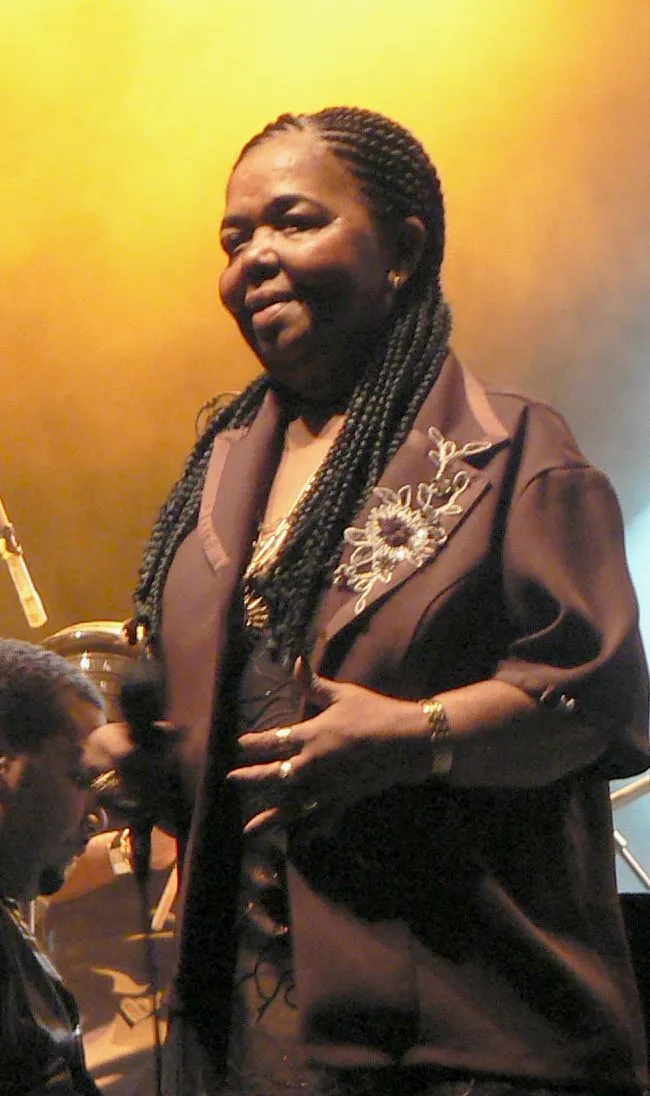
Cesária Évora performing at the Rockhal in Esch-sur-Alzette, Luxembourg, in 2009. Photo by Bremond, Wikimedia Commons, licensed under CC BY 3.0.
Cesária Évora
Cape Verde, morna
Born in 1941 in Mindelo on the island of São Vicente, she died in 2011. People called her the “barefoot diva.” She sang morna, Cape Verde’s national music. It has a slow tempo, with guitar at its heart, and often expresses saudade, a longing for home. UNESCO added morna to its intangible cultural heritage list in 2019. Recorded in Paris, “Miss Perfumado” made her known in France and opens with “Sodade.”
Listen to “Miss Perfumado” (Lusafrica, 1992), featuring “Sodade.”
In 1974, singer Elis Regina and composer Antônio Carlos Jobim recorded an album in 16 days in Los Angeles. It opens with “Águas de Março,” written by Jobim, who also plays piano and guitar.
Listen to “Elis & Tom” (1974), featuring “Águas de Março,” “Corcovado,” and “Triste.”
Read an album review, UNESCO’s account of morna, and two of the research sources behind this guide. For more artists from Africa and around the world, visit Artists.
What soft music can you listen to when you want to relax?
It varies from person to person. You know what feels right for you. Try “Amanké Dionti” by Ablaye Cissoko and Volker Goetze, “Miss Perfumado” by Cesária Évora, or “Elis & Tom” by Elis Regina and Antônio Carlos Jobim.
What makes music feel calm and soothing?
Tempo matters. In the study published in Heart in 2006, breathing and heart rate rose as the music got faster. Slow music could help listeners relax, and pauses had a greater effect. A few instruments and space between the notes can also make music feel calmer.
Can relaxing music help with stress?
A 2020 review of 104 trials found a measurable effect on stress, especially in how people reported feeling. The NCCIH points out that firm conclusions are still rare. Music may help you unwind. Keep following any care you need.
What relaxing instrumental music can you listen to while you work?
Try three albums with almost no lyrics. “Majâz” by Le Trio Joubran features three ouds and just one track with singing. “Opus” by Ryuichi Sakamoto is solo piano. “Ronroco” by Gustavo Santaolalla features ronroco and charango.
Where can you listen to these albums?
Under each artist, you’ll find links to official pages, including websites, YouTube channels, Spotify, Apple Music, or Deezer. Follow the link for the album you want to hear.