Slow, wordless music from around the world for a quiet moment
Try following a single note on a bansuri flute or a piano. Slow, wordless music can give you something to listen for when your mind wanders. Here are six albums from around the world, from bansuri flute to piano, and a look at what the research has found so far.
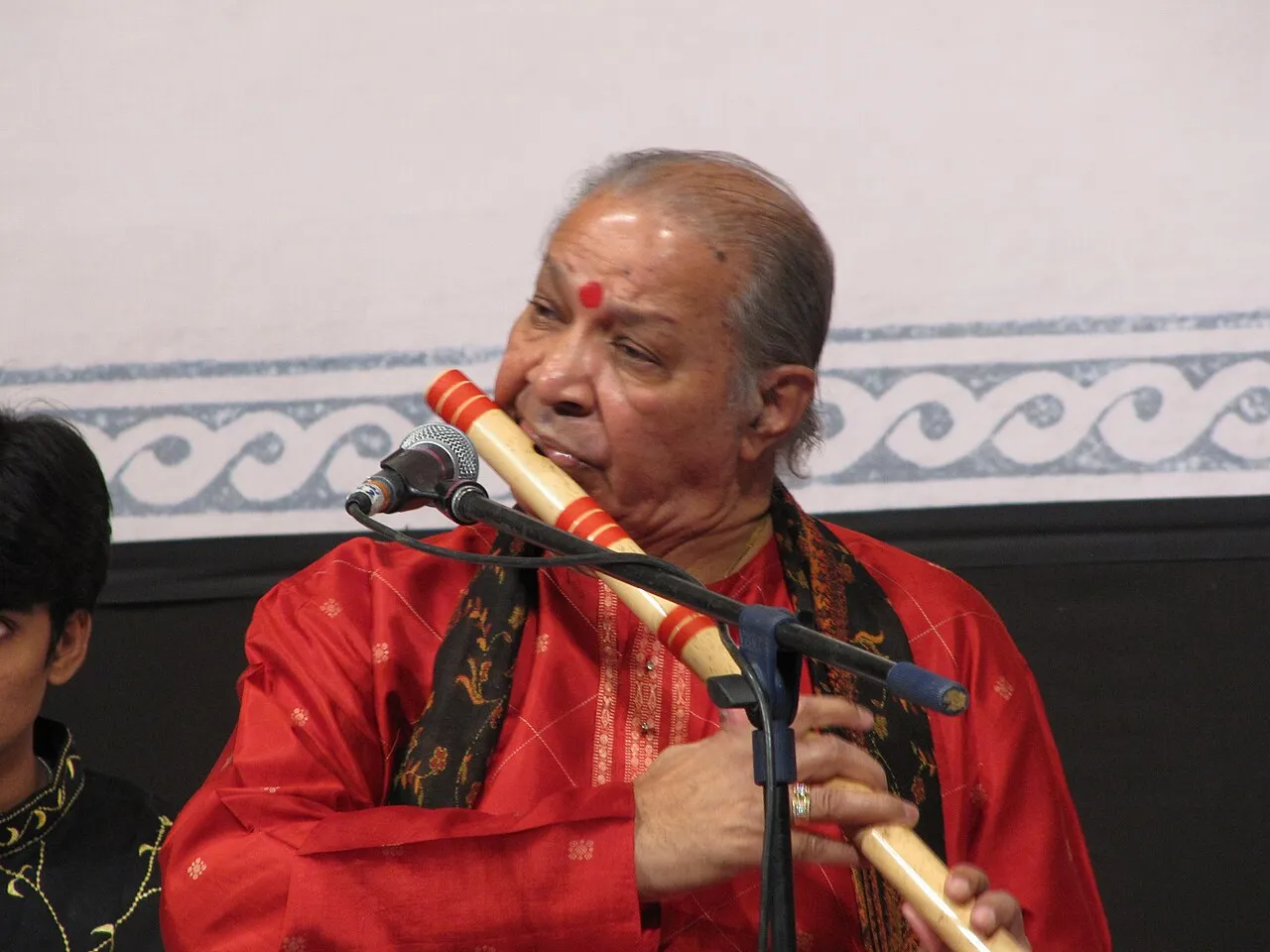
Hariprasad Chaurasia in concert in Bangalore in 2010. Photo by Kayaniv, Wikimedia Commons, licensed under CC BY-SA 3.0.
TempoA study published in 2006 found that slower music produced less of a physical response.
SilenceIn the same study, a two-minute pause between tracks had a greater calming effect than the initial rest period.
MindfulnessPaying attention to the present moment without judgment, as defined by the US National Center for Complementary and Integrative Health (NCCIH).
The selectionSix instrumental albums featuring bansuri, duduk, handpan, piano, oud, and layers of ambient sound.
01
Listen first
Before you read on, take a listen. Hania Rani is a Polish pianist. “Esja,” her first solo album, is a piano-only record. She recorded it partly in her Warsaw apartment and partly in Reykjavik. It takes its name from a mountain in southwestern Iceland that you can see from almost anywhere in the capital. Get comfortable, keep the volume low, and give yourself a moment to listen.
“Esja” by Hania Rani. Official video released by her label, Gondwana Records.
02
What to listen for
“Meditation music” can come from many genres. Music that suits a quiet moment tends to share three qualities.
A slow tempo. Listen for the space between notes. You can settle into the pace and give each sound your attention.
Repetition. A recurring phrase, a sustained note, or a loop gives you a point of reference. When your mind wanders, you know where to return. Brian Eno uses this idea in “Music for Airports,” layering loops of different lengths.
Music without words. Words draw you into their meaning. You follow them and respond in your head. With wordless music, you can stay with the sound itself. That’s why this guide features instrumental albums.
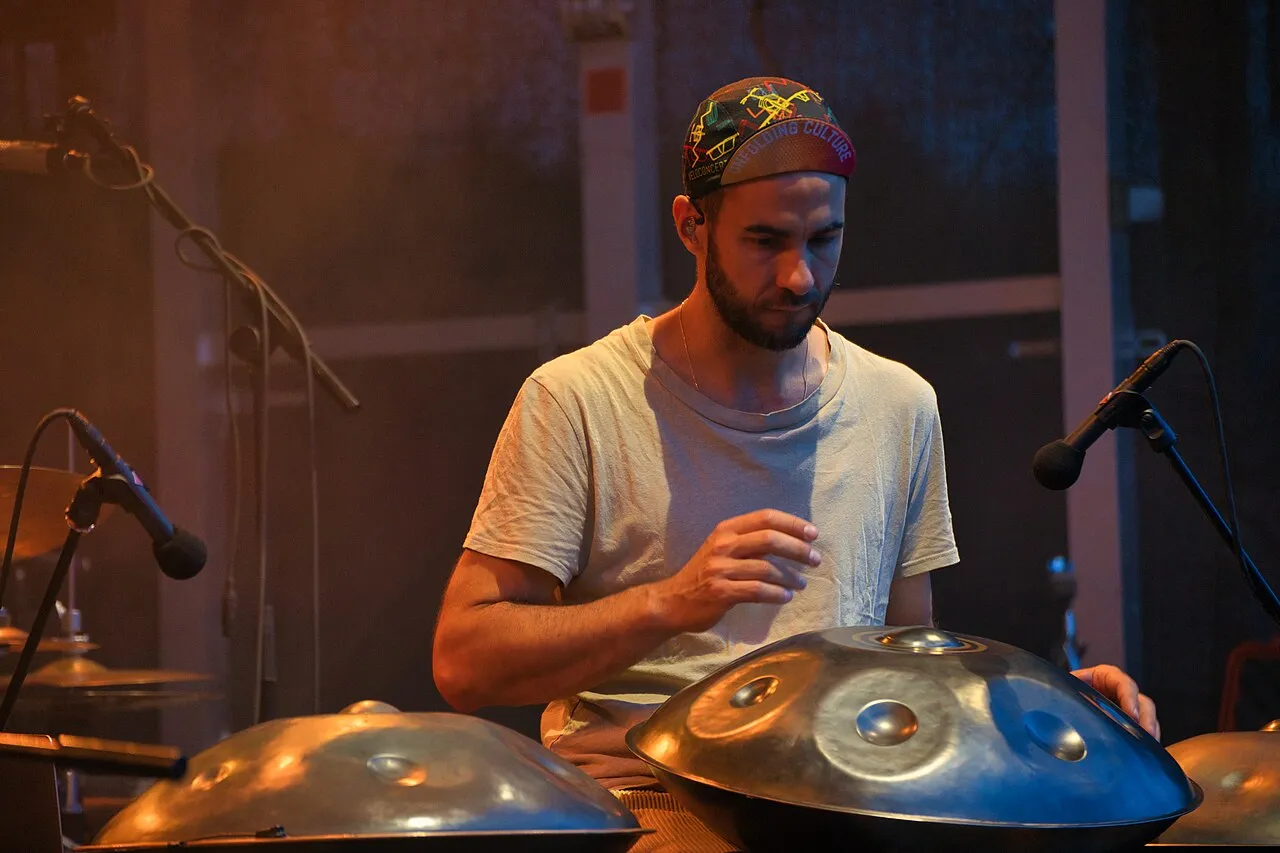
Handpans onstage with the Manu Delago Ensemble at the INNtöne festival in 2024. Photo by Bernd Scholkemper (Schorle), Wikimedia Commons, licensed under CC BY-SA 4.0.
Some instruments lend themselves to quiet listening. Take the handpan. Felix Rohner and Sabina Schärer developed its predecessor, the Hang, in Bern, Switzerland, in 2000. It consists of two steel shells joined at the rim. You rest it on your lap and play it with your bare hands. It draws on the steelpan of Trinidad and Tobago. Playing by hand gives it a softer sound.
03
What the research says
In 2006, the medical journal Heart published a study by Bernardi, Porta, and Sleight. The researchers played six styles of music for 24 healthy adults, evenly split between musicians and non-musicians. They measured breathing, heart rate, and blood pressure. Faster tempos produced a stronger physical response, and slower music had less of an effect. Heart rate dropped more during an Indian raga played on sitar than during the other pieces.
Silence also mattered. A two-minute pause between pieces had a greater calming effect on participants than the five minutes of rest at the start. Brian Eno had a similar idea in mind. For one piece on “Music for Airports,” he wanted the silence to last at least twice as long as the sound.
The NCCIH studies these practices and notes that most research on music and health is still preliminary. Much of the research on meditation is at a similar stage. Treat these records as something to listen to. Keep following any medical care you need.
04
How to meditate with music
You can start with a moment of quiet. The NCCIH describes mindfulness as paying attention to the present moment without judgment. Music gives you a sound to focus on.
Before you press play
Two minutes to get ready
Choose a full album so the style stays more consistent than it might on a playlist. Sit comfortably. Keep the volume low. The NCCIH notes that loud sound can damage your hearing.
While you listen
Ten minutes or more
Follow one sound. It could be the flute, the lower notes of the piano, or the oud’s low string. When a thought comes up, let it pass and return to the sound. At the end, leave a moment of silence.
05
Six albums for meditation
Hariprasad Chaurasia
India, bansuri flute
Born in Allahabad in 1938, Chaurasia plays the bansuri, a bamboo flute, in the Hindustani classical tradition. On “Call of the Valley,” he joins Shivkumar Sharma on santoor and Brij Bhushan Kabra on slide guitar. The album follows a day in the life of a Kashmiri shepherd. The ragas change with the time of day.
Born in Solak, Armenia, in 1928, Gasparyan was known as a master of the duduk. He died in 2021. The duduk is a double-reed instrument related to the oboe and carved from apricot wood. It’s often played in pairs. One player uses circular breathing to sustain a continuous note while the other plays the melody. Gasparyan recorded these Armenian folk tunes in 1983 with Vachagan Avakian playing the drone. Brian Eno’s Opal label released the recordings as “I Will Not Be Sad in This World” in 1989.
Listen to “I Will Not Be Sad in This World” (Opal, 1989).
Originally from Tyrol and based in London, Delago made his name playing the Hang. For “Parasol Peak,” he took six musicians and a film crew into the Tyrolean mountains to record at different elevations. Alongside the handpan, you’ll hear brass, woodwinds, accordion, cello, and even climbing gear.
Born in Gdańsk in 1990, Rani trained as a classical pianist and often brings jazz into her playing. “Esja,” the track you can hear at the top of this page, is the title track of an album played entirely on solo piano.
Born in the medina of Tunis in 1957, Brahem brings classical Arabic music, folk tunes, and jazz together on the oud. On this album he plays in a trio with François Couturier on piano and Jean-Louis Matinier on accordion. An AllMusic reviewer compares the delicate interplay of the three instruments to lace.
Eno gave ambient music its name. The idea for this album came to him after hours of waiting at Cologne-Bonn Airport. It layers loops of piano, synthesizer, and wordless vocals. He wanted music that was “as ignorable as it is interesting.”
Read the research behind this guide in the links below. To discover more artists from Africa and around the world, explore our artists or read our guide to the balafon.
Try slow, repetitive music without lyrics, like the six albums above, which range from bansuri flute to piano.
What is meditation with music?
It means using music as the focus of your attention. Listen to a track, and when your mind wanders, come back to the sound. All you need is a quiet moment, whatever your beliefs.
What music works well for mindfulness meditation?
Mindfulness means paying attention to the present moment without judgment. Choose a full instrumental album and follow one instrument. Give the spaces between the notes as much attention as the notes themselves.
Does relaxing music really help with meditation?
A study in Heart found that faster tempos produced a stronger physical response and a silent pause helped participants settle. The NCCIH notes that most research on music and health is still preliminary. Pay attention to how you feel as you listen.