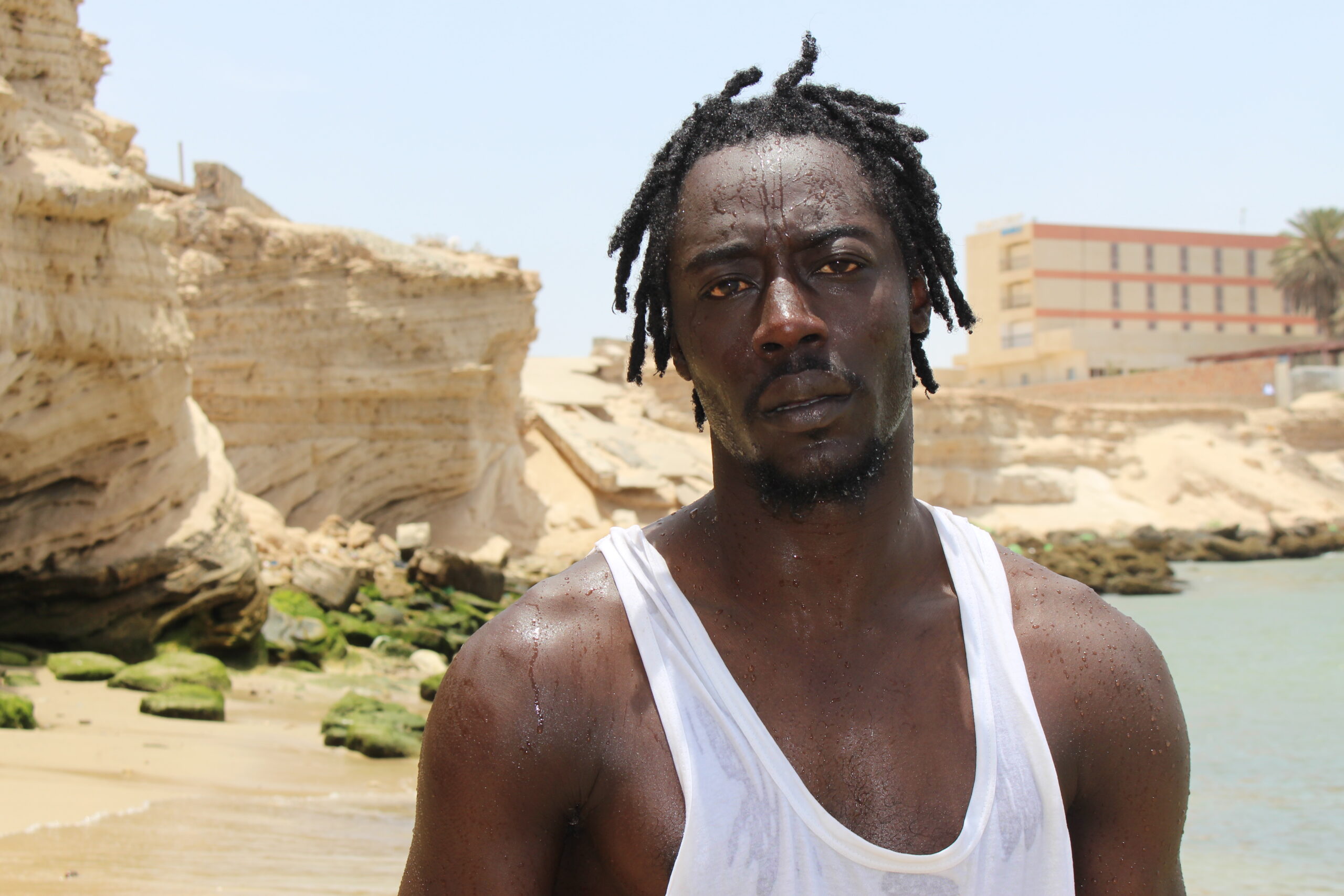
Mister Mada had the honor of being interviewed by The Swingkid Fanzine, a decidedly punk magazine for collectors and reggae fans around the world. Here's the interview transcript…
1. Mister Mada, could you tell our readers a little about yourself? Who are you, what kind of music do you play, and how did your music project get started?
"I'm an artist from Mauritania (West Africa). I got my start in music through rap, especially with Princes Hip-Hop, a collective that lasted six years. In 2012, my passion for rap grew to include reggae. Ever since, singing has been how I find inspiration and express myself. Now I've also decided to improve my skills as an instrumentalist on guitar, piano, and bass."
https://www.youtube.com/watch?v=YXpfxDQGu1c
2. Do you have any family members in music who helped you become a musician?
"First and foremost, I think of my mom, who's always been there for me emotionally and financially. It's thanks to my dear mom that I was able to record my first demo. Some of my closest friends also gave me a lot of encouragement, and they still do to this day."
3. How did you get into rap and reggae? What draws you to those styles of music?
"When it comes to rap, I've been listening to a lot of it for two decades, whether it's French, American, or African hip-hop. As a young teenager trying to figure out who I was, I have to admit I really liked rappers' style, and that's how I got interested in the movement. Later, something else happened that changed my direction. In 2006, after completing my vocational training in electrical work, I entered a competitive hiring process that turned out to be run like a racket. Corruption had already decided who would get in. I was deeply hurt by what happened, and I was desperate to speak out loud and clear against the shady dealings that are unfortunately so common in our societies. I didn't know how to do it, but I eventually found my answer in rap, and my lyrics gave me a way to raise awareness among the people around me. Eventually, reggae won me over completely. The rhythms pulled me in and the socially conscious messages spoke to me, so I naturally gravitated toward reggae rap."
4. I don't know anything about music in Mauritania. What challenges have you faced in making music? Is it easy for you to produce your music there? And what options do you have for recording songs and selling your music?
"The most common problem for artists in Mauritania is getting the permits they need to put on concerts. On top of that, most of the venues that used to host celebrations and live music closed one after another. So there are very few places for Mauritanian artists to perform. Likewise, there are very few studios where artists can make good-quality recordings. There's no copyright collective in the country, so the few artists who manage to record their work can't earn money from what they create. I'd say we have to build all of that from scratch in our country!"
5. What do people like me, hearing about you for the first time, say when they look back at your music career? What have been the major milestones or events in your career?
"First of all, just knowing that people like you enjoy and share my music really touches me. I think people looking in from a distance, who don't know me personally, don't fully understand how my music career has unfolded. I'm still a young artist who's finding his way. For example, most people in my city knew me as a rapper, and the people who listen to my newer material, which is closer to folk music, aren't the audience I originally had in mind. I've gone in a new direction, and sometimes that isn't clear to everyone. In the end, the biggest moments in my career so far have been my live performances and concerts and, of course, recording my first EP, “Hasta la Vista,” which you can download for free here."
6. Your videos are produced by Aimelody. What kind of organization is it, and how are you connected to it?
"Aimelody is a nonprofit whose mission is to use sound recording and visual art to entertain and enrich people's lives through culture. Beyond its work as a label and recording studio, it's an association in its own right. One of its goals is to produce and promote artists who have plenty of talent and very few material resources. When the association set up in Mauritania in 2014, I was lucky enough to attend and take part in its activities. So it felt natural when the studio offered to record my first EP, along with several short live performance videos and music videos."
7. I discovered you through the video for the song "immigrés". How do you feel about Africans migrating to Europe?
"It's about wanting to be happy at any cost! Putting your life on the line and refusing to give up, whatever the cost. No matter how hard it gets. No matter how long it takes. It's an all-or-nothing gamble they no longer dare to face head-on. Unemployment and poverty are the main reason people migrate, and the dream and mirage of a Western El Dorado do nothing to ease either one."
8. Europe has had a strong influence on the African continent since the colonial era. What's your view on that? What role does Europe play in a country like Mauritania today?
"In Mauritania, Europe shapes and influences both the public and private sectors in different ways. That includes economic support through humanitarian aid, grants, and loans, as well as social influence in areas like human rights, and cultural influence. In fact, the country's only fully equipped large music stage is at the French cultural center in Nouakchott, the capital."
9. How would you describe Mauritania to someone who's never been there?
"Mauritania is in West Africa. It borders Algeria to the north, the Atlantic Ocean to the west, Mali and Senegal to the south, and Western Sahara (Morocco) to the northwest. Its location makes Mauritania a bridge between North Africa (the Maghreb) and sub-Saharan Africa, so it's a country full of different cultures and full of life."
10. If anything were possible for you as a musician, what would you dream of doing?
"I'd dream of having a professional studio where I could record albums by Mauritanian artists, touring all over the world, meeting and jamming with artists from all backgrounds, and sharing music and learning from one another in different countries so I could discover their languages and cultures, because music is peace, because music is love, because music is unity."