A fiddle launches into a reel. The uilleann pipes answer, and a bodhrán keeps the beat. Celtic music includes the traditional music of Ireland as well as that of Scotland, Brittany, and Galicia.
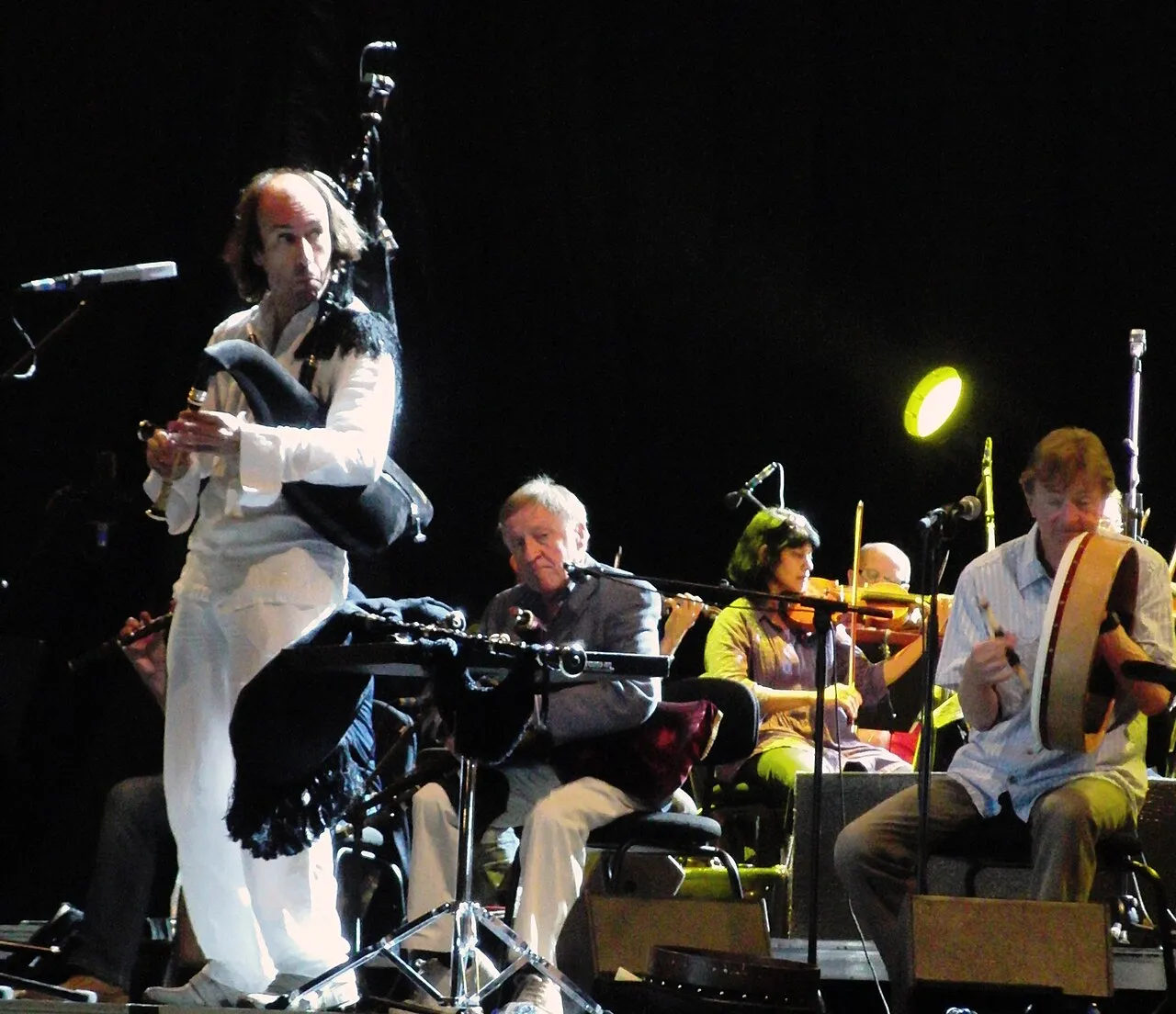
Carlos Núñez and The Chieftains in Obradoiro Square, Santiago de Compostela, in 2009. Photo by Amio Cajander, Wikimedia Commons, licensed under CC BY-SA 2.0.
Where it’s playedIreland, Scotland, Wales, Cornwall, Brittany, the Isle of Man, Galicia, and Asturias.
DancesReels, jigs, hornpipes, and polkas, played in sets of two to four tunes.
InstrumentsFiddle, uilleann pipes, tin whistle, flute, accordion, bodhrán, and harp.
HeritageUNESCO listed three traditions. Fest-noz was added in 2012, uilleann piping in 2017, and Irish harp playing in 2019.
01
Start here
Start with a voice. Clannad wrote “Theme from Harry’s Game” in 1982 for a British TV series. Sung entirely in Irish, it reached No. 2 in Ireland and No. 5 in the UK. Here, the band performs it live in Bath.
“Theme from Harry’s Game” (live in Bath), by Clannad, posted on the band’s official channel.
02
What “Celtic” means
The term covers the music of peoples who identify as Celtic. Ireland, Scotland, Wales, Cornwall, and Brittany have kept their languages and musical traditions alive. The term also takes in the Isle of Man, Galicia, and Asturias. Its reach extends as far as Newfoundland and Cape Breton Island in Canada.
The idea dates back to the 19th century, when La Villemarqué’s “Barzaz Breiz” drew links between Breton songs and poetry from the British Isles. Alan Stivell popularized the idea in the 1970s. Some musicians see it as a commercial label and prefer to talk about “Celtic music traditions.” Each place has its own tunes and dances.
In Brittany
Western France
At a fest-noz, or “night festival,” you can dance the an dro, gavotte, or plinn to the biniou and bombarde or to kan ha diskan singing. UNESCO listed fest-noz in 2012. Lorient hosts the Festival interceltique every August.
In Galicia
Northwestern Spain
Here you’ll find the gaita, the Galician bagpipe. The player blows into the bag and controls the pressure with their arm.
03
Instruments
The fiddle. It’s a violin played in a different style. Fiddlers add quick ornaments such as rolls and cuts to the melody. Each region has its own style.
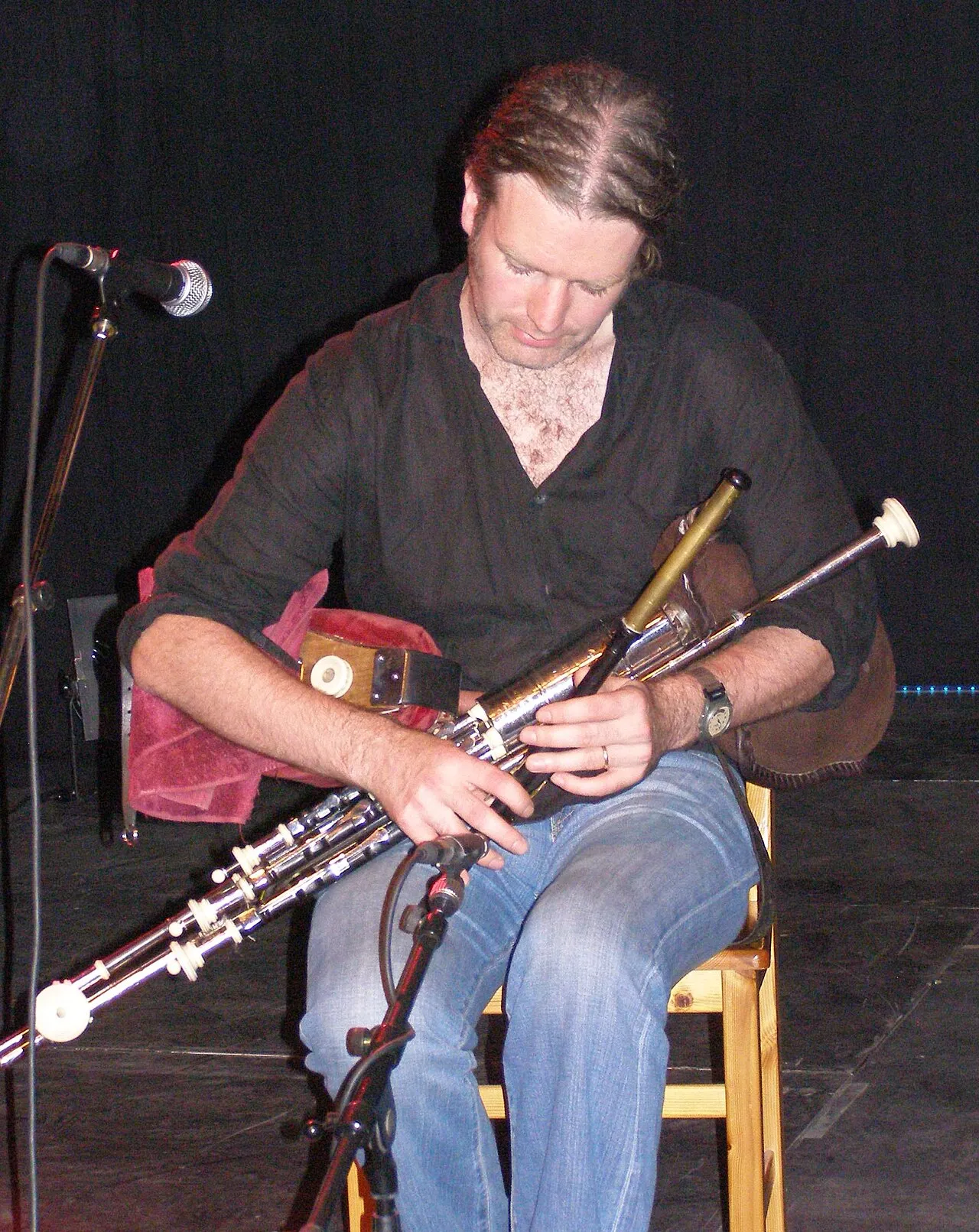
The uilleann pipes. These Irish bagpipes use a bellows strapped to the waist and right arm to fill the bag. “Uilleann” comes from the Irish word for elbow. The chanter spans two octaves, and the pipes have three drones and keyed regulators. UNESCO added uilleann piping to its intangible cultural heritage list in 2017.
Cillian Vallely of Lúnasa playing the uilleann pipes in Switzerland in 2006. Photo by David M. Jensen, Wikimedia Commons, licensed under CC BY-SA 3.0.
The tin whistle. Also called a penny whistle, it’s a small six-hole tube usually pitched in D. Factory production began in Manchester in 1840. The wooden flute has been part of the tradition since the mid-19th century.
The bodhrán. This frame drum has a goatskin head. You strike it with a short stick called a tipper and change the sound with your other hand behind the skin. The drum rose to prominence in the 1960s with composer Seán Ó Riada.
The harp. A symbol of Ireland, the harp appears on its euro coins. UNESCO listed Irish harp playing in 2019. Early harpists plucked metal strings with long fingernails. In Brittany in the 1950s, Georges Cochevelou reconstructed a Celtic harp. His son, Alan Stivell, still plays it.
Add the accordion and concertina, which arrived in the late 19th century, and the Greek bouzouki, which arrived in the late 1960s.
04
Dances and sessions
Irish music is made for dancing. You’ll hear reels in two or four beats, jigs in 6/8, slip jigs in 9/8, swinging hornpipes, and polkas. Musicians string two to four tunes together in “sets.” Slow airs are played on their own.
On the dance floor, step dancers keep their upper bodies still and let their feet do the work. Shows like Riverdance popularized the style from 1994 onward.
Today, you’ll hear this music mainly at pub sessions, often without dancers. Sessions are informal, and a musician might play a slow air solo between sets. The first known pub session took place in Camden Town, London, in 1947. Dublin pubs followed in the 1960s.
05
Artists to listen to
The Chieftains
Dublin, Ireland
The group formed in Dublin in 1962 around uilleann piper Paddy Moloney, who died in 2021. They won six Grammy Awards and provided music for Kubrick’s “Barry Lyndon.” In 1983, they became the first Western group to play on the Great Wall of China.
What to play “The Long Black Veil” (1995) and “Santiago” (1996), an album devoted to Galicia and featuring Carlos Núñez.
The quartet formed in 1972 with Christy Moore on vocals, Andy Irvine and Dónal Lunny on strings, and Liam O’Flynn on uilleann pipes. Lunny and Irvine popularized the bouzouki in Irish music.
What to play Their debut “Planxty” (1973), followed by “The Well Below the Valley” (1973) and “Cold Blow and the Rainy Night” (1974).
Ciarán, Pól, and Moya Brennan formed the group in 1970 with their twin uncles, the Duggans. They began by performing traditional songs in Irish. Enya sang with the group from 1980 to 1982.
What to play “Magical Ring” (1983), which opens with “Theme from Harry’s Game,” and “Macalla” (1985).
The group formed in 1989. Singer and bodhrán player Cathy Jordan has led it since 1991, backed by fiddle, flute, accordion, and bouzouki. Dervish represented Ireland at Eurovision in 2007.
What to play “Harmony Hill” and “Live in Palma” (1997), recorded in concert.
Born Alan Cochevelou in 1944, he plays the Celtic harp his father reconstructed. He later added electric guitar and drums to his music. “Renaissance de la harpe celtique” (1971) earned him an award from the Académie Charles-Cros.
What to play “Renaissance de la harpe celtique” (1971) and “À l’Olympia,” recorded in Paris on February 28, 1972.
Born in Vigo in 1971, he plays the gaita and several flutes. He worked so closely with The Chieftains that he became known as their “seventh member.” He plays on “Santiago,” their Grammy-winning album.
What to play His debut “A Irmandade das Estrelas” (1996) and “Celtic Sea” (2023).
It’s the traditional music of places that identify as Celtic, from Ireland to Galicia. Each has its own tunes and instruments, which is why many musicians prefer to speak of Celtic music traditions in the plural.
What’s the difference between Celtic music and Irish music?
Irish music is one of several Celtic music traditions. The term also covers Brittany, Scotland, and Galicia, each with its own dances.
What instruments are used in traditional Irish music?
The fiddle, uilleann pipes, tin whistle, flute, accordion, concertina, bodhrán, harp, and bouzouki.
Is Breton music Celtic?
Yes. Brittany has a living tradition you can join at a fest-noz, where people dance to the biniou and bombarde.
What are some well-known Celtic tracks to start with?
Try “Theme from Harry’s Game” by Clannad and “Tri Martolod” by Alan Stivell, then explore the albums above.
Is there any gentle Celtic music for winding down?
Yes. Alongside the reels you can dance to, there are slow airs played on their own. Try Alan Stivell’s harp on “Renaissance de la harpe celtique” or Clannad’s vocals.
Sources
Celtic music, English Wikipedia (countries and regions). Also see Musique celtique, French Wikipedia (origin of the term, Alan Stivell, and debate over the label).
Irish traditional music, English Wikipedia (tunes, sets, instruments, sessions, Comhaltas, and Ó Riada).